
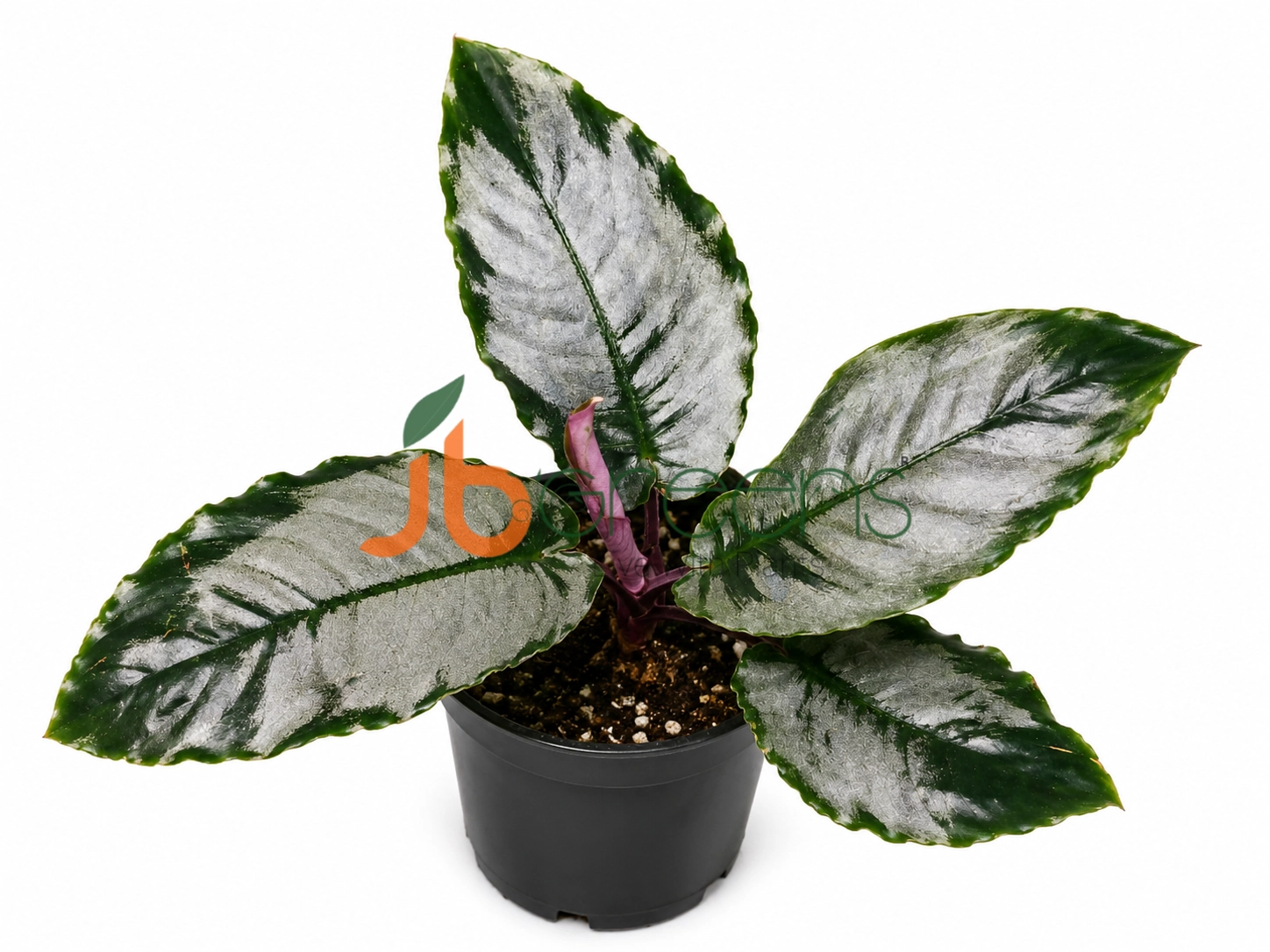
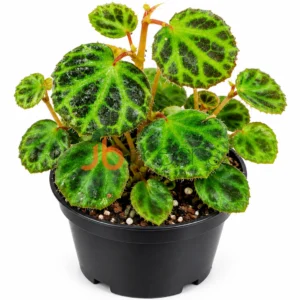
Schismatoglottis ‘Black Metallic’ (also marketed as Schismatoglottis Black Metallic) is a compact, clumping aroid prized for its striking foliage rather than flowers. It is a hybrid form of Schismatoglottis (often related to S. roseo‑picta group) selected for dark, almost metallic‑black leaves with subtle veining that can flash hints of green, silver, or burgundy depending on light and age.
Below is a detailed, practical guide focused on description, care, adaptability, and growing conditions.
Appearance and growth habit
-
Leaves: Lance‑shaped to broadly oblong, held on short petioles above a tight basal cluster; mature leaves are deep purplish‑black or very dark green‑black with a slightly glossy, “metallic” sheen. Veins may show as faint lighter‑green or silvery lines, especially under bright indirect light.
-
Size and form: Typically stays small to mid‑sized, around 20–40 cm tall and wide at maturity, forming a neat, low‑growing clump rather than a tall, upright plant. It grows via rhizomes underneath the soil, sending out new shoots that fill the pot over time.
-
Texture: Leaves are somewhat soft and flexible, not leathery, which makes them more prone to bruising or tearing if handled roughly.
Light requirements
-
Ideal: Bright, indirect light (e.g., near an east‑facing window or a few feet back from a south/west window with a sheer curtain). This brings out the deepest, most “metallic” leaf color and encourages compact growth.
-
Adaptability: It tolerates medium to low indirect light reasonably well, but growth slows, leaves may become larger and lighter‑colored, and the dark “metallic” effect can fade. Direct hot sun scorches the leaves, causing bleached or crispy patches.
Watering and moisture
-
Preferred method: Keep the soil consistently moist but not soggy. Water when the top 2–3 cm (about the top inch) of the mix feels slightly dry; Schismatoglottis can wilt noticeably if it dries out, but it usually recovers quickly after watering.
-
Avoid: Standing water in the saucer or overly compact, heavy soil; both easily lead to root rot. Empty the saucer after watering and use a pot with drainage holes.
-
Water quality: Use room‑temperature, preferably low‑chlorine water (left out for a few hours or filtered) to avoid leaf tip burn, especially in hard‑water areas.
Humidity and temperature
-
Humidity: Adapts to typical household humidity (40–50%) but thrives in higher humidity (50–70%), where leaf tips stay clean and growth is more vigorous. If the air is very dry, occasional misting, a pebble tray, or a small humidifier nearby helps.
-
Temperature: Prefers warm, stable conditions between about 18–27°C. It dislikes cold drafts, sudden drops below 15°C, and prolonged exposure to air‑conditioning or heater vents, which can cause leaf yellowing or stunting.
Soil, potting, and drainage
-
Best mix: A light, airy, well‑draining aroid or “chunky” mix works best. A base of standard potting soil can be amended with perlite, orchid bark, and coco coir or peat to improve aeration and prevent compaction.tumbleweedplants+1
-
Pot choice: Use a pot with drainage holes and avoid oversized containers; Schismatoglottis prefers being slightly snug and can go slightly root‑bound before repotting. Repot every 1½–3 years when roots fill the pot or growth slows.
Fertilising and feeding
-
Growing season (spring–summer): Feed every 4–6 weeks with a balanced liquid fertiliser (e.g., 10‑10‑10 or 20‑20‑20) diluted to half‑strength; some growers prefer a slightly nitrogen‑rich formula to emphasize lush foliage.
-
Dormancy (late autumn–winter): Reduce or stop fertilising altogether, since growth slows and excess salts can build up in the mix.
Adaptability and resilience
-
Light adaptability: Tolerates a wide range of indirect light, from medium‑low to bright, though it looks best and grows most compactly in brighter conditions.
-
Humidity adaptability: Survives normal room humidity, but foliage issues (brown tips, slow growth) are more common in very dry or hot‑air‑conditioning environments.
-
Water adaptability: Responds quickly to both under‑ and over‑watering; it wilts when dry but usually perks up within hours, while waterlogging can cause root rot if not corrected.
Growing conditions summary (ideal setting)
-
Light: Bright, indirect light (near east window or filtered south/west).
-
Temperature: 18–27°C, away from cold drafts and hot air‑con.
-
Humidity: 50–70% if possible; tolerates 40%+.
-
Water: Keep evenly moist; water when top 2–3 cm of soil is slightly dry.
-
Soil: Well‑draining, aerated aroid mix with good drainage.
-
Fertiliser: Weak‑strength balanced liquid feed every 4–6 weeks in warm months.
Only logged in customers who have purchased this product may leave a review.
Related products
-
ABOUT THE PLANT: Indonesia endemic plant The photo is representative Plant in the good condition and health It is sold per plant Schismatoglottis is a genus of flowering plants in the family Araceae. Members of the genus are similar in appearance and growth habit to those of the genus Homalomena, but the two genera are …
Read more -
ABOUT THE PLANT: Indonesia endemic plant from Kalimantan The photo is representative Plant in the good condition and health It is sold per plant Schismatoglottis is a genus of flowering plants in the family Araceae. Members of the genus are similar in appearance and growth habit to those of the genus Homalomena, but the two …
Add to cart -
Schismatoglottis sp. from Kapuas Hulu is a rare, undescribed species of aroid from the lowland rainforests of Kapuas Hulu in West Kalimantan, Borneo (Indonesia), likely aligned with the Schismatoglottis patentinervia clade known from that region. Description This plant features the classic Schismatoglottis traits: compact, clumping growth via creeping rhizomes that spread slowly across moist substrates. …
Add to cart -
ABOUT THE PLANT: Indonesia endemic plant The photo is representative Plant in the good condition and health It is sold per plant Schismatoglottis is a genus of flowering plants in the family Araceae. Members of the genus are similar in appearance and growth habit to those of the genus Homalomena, but the two genera are not …
Read more


Products
-
 Jewel Cheirostylis montana
Original price was: ₹1,450.00.₹1,100.00Current price is: ₹1,100.00.
Jewel Cheirostylis montana
Original price was: ₹1,450.00.₹1,100.00Current price is: ₹1,100.00.
-
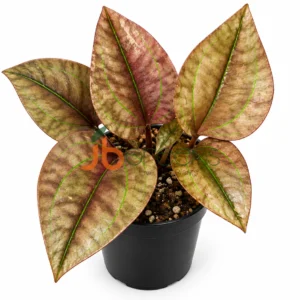 Orchid Nephelaphyllum Pulchrum
Original price was: ₹1,300.00.₹950.00Current price is: ₹950.00.
Orchid Nephelaphyllum Pulchrum
Original price was: ₹1,300.00.₹950.00Current price is: ₹950.00.
-
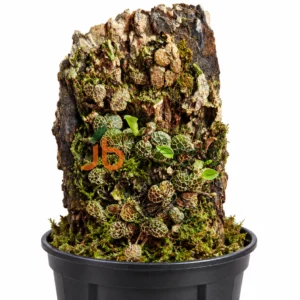 Porpax Reticulata
Original price was: ₹1,550.00.₹1,300.00Current price is: ₹1,300.00.
Porpax Reticulata
Original price was: ₹1,550.00.₹1,300.00Current price is: ₹1,300.00.
-
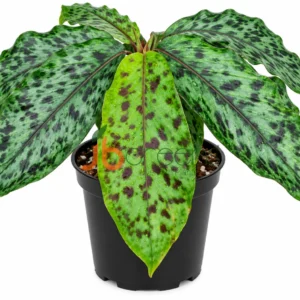 Etlingera brevilabrum
Original price was: ₹3,200.00.₹2,800.00Current price is: ₹2,800.00.
Etlingera brevilabrum
Original price was: ₹3,200.00.₹2,800.00Current price is: ₹2,800.00.
-
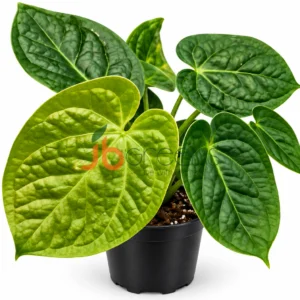 Anthurium Doraiki x Luxurians
Original price was: ₹4,500.00.₹3,900.00Current price is: ₹3,900.00.
Anthurium Doraiki x Luxurians
Original price was: ₹4,500.00.₹3,900.00Current price is: ₹3,900.00.
Reviews
There are no reviews yet.