
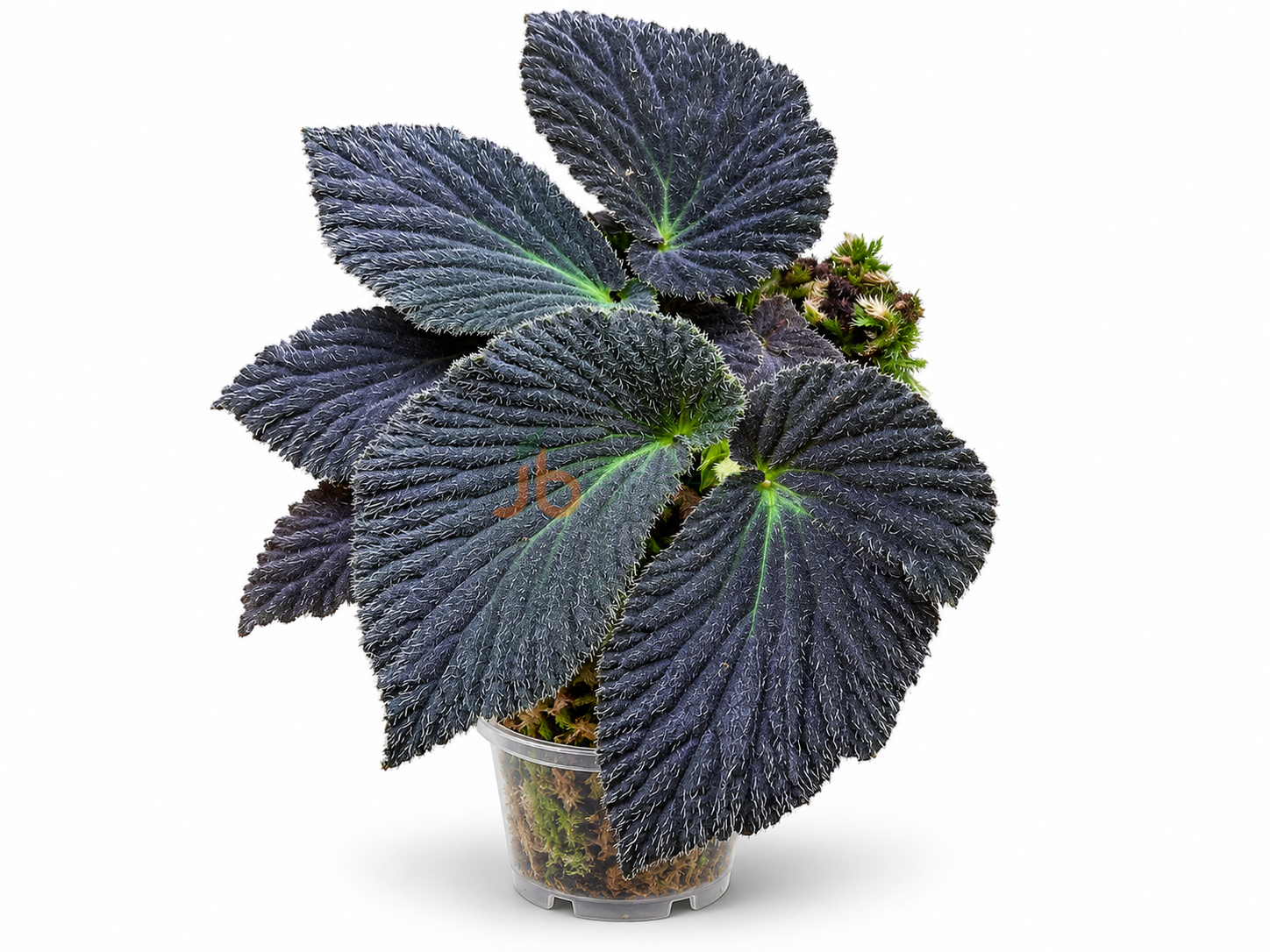
Bring a rare piece of the Bornean rainforest into your collection with Begonia lambii, a coveted, collector-grade species prized for its deeply corrugated, velvety foliage and shimmering purple-magenta hairs. Compact, dramatic, and tailor-made for enclosed glass gardens, this exquisite botanical gem is now available at www.jbgreens.com.
Quick Botanical Profile
| Feature | Details |
| Scientific Name | Begonia lambii Kiew (Section Petermannia) |
| Family | Begoniaceae |
| Origin / Native Habitat | Endemic to Sabah, Borneo (Malaysia) — limestone hills of Batu Punggul & Tinahas |
| Plant Type & Lifespan | Evergreen, herbaceous perennial; long-lived under stable tropical conditions |
| Growth Habit | Compact, low-growing rosette with short stems (up to 13 cm tall) |
| Care Level | Intermediate to Experienced Growers |
Discovery, History & Native Habitat
Begonia lambii was formally described and named in 2001 by renowned botanist Ruth Kiew (Singapore Botanic Gardens) in honor of Anthony Lamb, a celebrated botanist and horticulturist who dedicated decades to studying and conserving Sabah’s flora.
In the wild, this rare species is a narrow endemic found on shaded, humid limestone outcrops and mossy rock faces—most famously around Batu Punggul and Batu Tinahas in Sabah, Borneo. Growing in cool, misty forest understories where air moisture stays consistently high and water drains rapidly off limestone crevices, B. lambii has evolved into a true terrarium specialist.
Speciality, Features & Identification Methods
What sets Begonia lambii apart from ordinary houseplants is its unmistakable texture and color contrast:
-
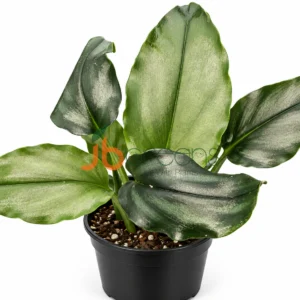
Deeply Corrugated Foliage: Leaves are heavily textured (bullate) with a plush, velvety surface that catches soft light beautifully.
-
Signature Purple-Magenta Hairs: One of the key botanical identification traits of B. lambii is its covering of fine, bristly purple-magenta hairs across the foliage.
-
Rich Coloration: Mature leaves display deep forest-green to rich chocolate-brown tones on top, contrasted by vibrant reddish-purple undersides.
-
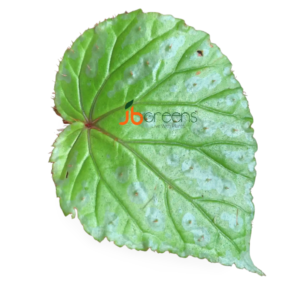
Asymmetric Leaf Shape: Like all members of Begoniaceae, its heart-shaped leaves are distinctly asymmetrical.
-
Compact Rosette Form: Unlike tall cane begonias, B. lambii stays neat and low, making it easy to identify by its short stem and clustered, deeply textured leaves.
-
Delicate Blooms: Under ideal conditions, it produces charming, dainty light-pink flowers that stand out against the dark foliage.
Complete Care Guide
Lighting Requirements
Provide bright, indirect light or dappled shade. Under full-spectrum LED grow lights (6–10 hours daily), its dark velvety tones and reddish undersides intensify. Avoid harsh direct sunlight, which will scorch the delicate leaves.
Watering Requirements
Keep the substrate consistently moist, never soggy. Water with rainwater, RO, or filtered water when the top layer of media begins to dry slightly. Always avoid letting water pool on the velvety leaves to prevent rot.
Humidity & Temperature
-
Humidity: Thrives in 75%–95% relative humidity. It is best grown in a closed terrarium, cloche, or high-humidity plant cabinet rather than open room air.
-
Temperature: Maintain 18°C–24°C (65°F–75°F). Protect from cold drafts and sudden temperature swings.
Potting & Recommended Media
Because Begonia lambii naturally grows on airy, mineral-rich limestone slopes, it demands a loose, chunky, well-draining yet moisture-retentive substrate.
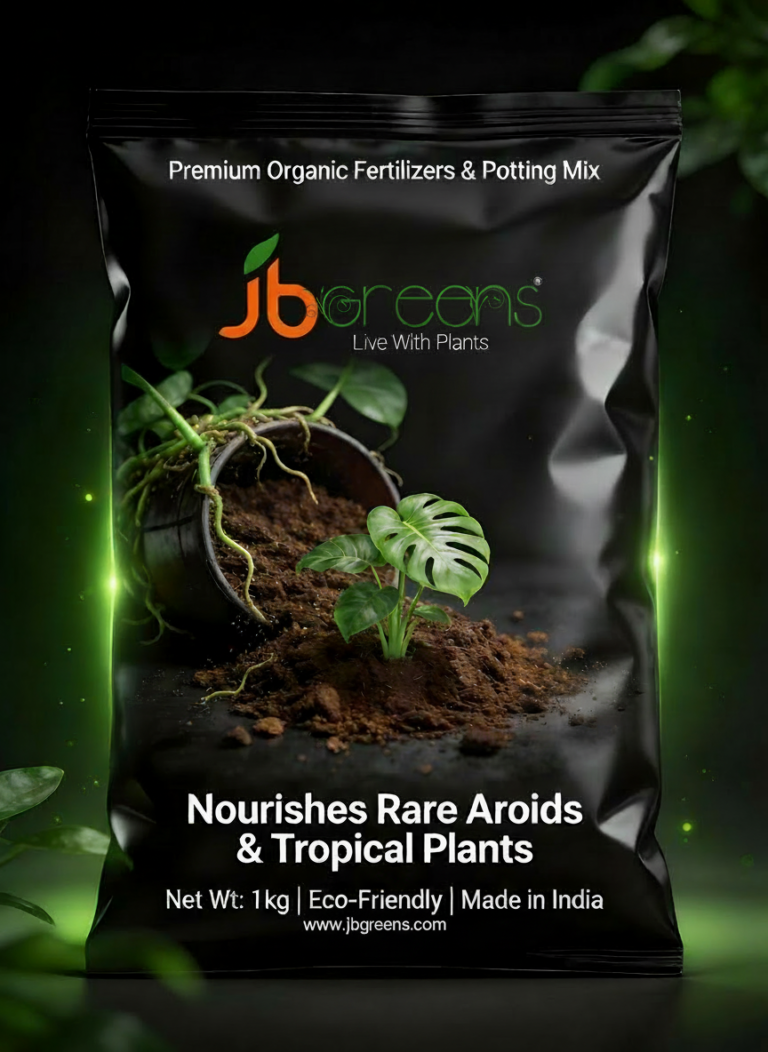
JB Greens Recommendation: For best root health and zero root rot, pot your Begonia lambii in our Premium Aroid & Terrarium Potting Media available at www.jbgreens.com. You can also mix in a pinch of crushed limestone or horticultural charcoal to mimic its native Bornean habitat.
Nutrient Requirements
Begonia lambii is a light feeder. Over-fertilizing can burn its fine roots and dull its foliage.
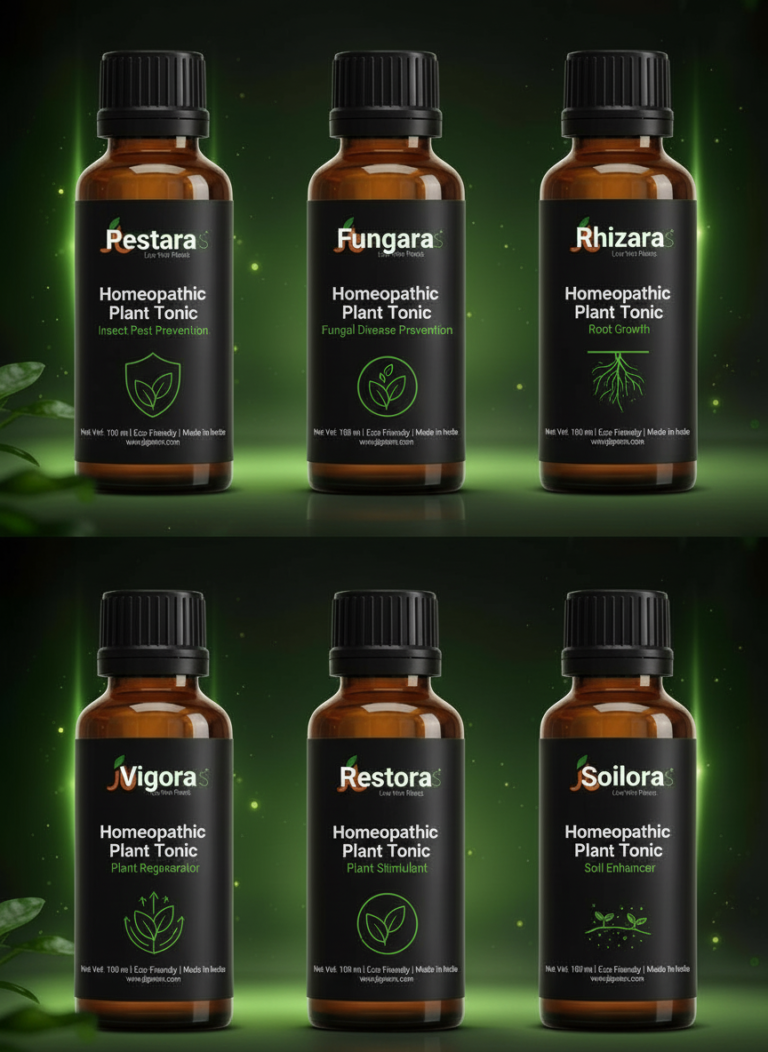
JB Greens Recommendation: Feed once every 3–4 weeks during active growth with a diluted dose (¼ to ½ strength) of JB Greens Organic Plant Tonic available at www.jbgreens.com to support lush leaf texture, vibrant coloration, and strong root development.
Repotting
Repot only every 12–18 months or when roots gently fill the container. Choose a shallow pot just 2–3 cm wider than the root ball, refresh the substrate with fresh JB Greens Potting Media, and handle the delicate stems and roots with care.
Terrarium & Paludarium Uses
Begonia lambii is a dream plant for miniature ecosystems:
-
Closed Glass Terrariums: Its compact rosette size and love for high humidity make it an ideal focal-point centerpiece alongside mosses, Fittonia, and miniature ferns.
-
Paludariums & Vivariums: Mount or plant it in the elevated terrestrial or rock-ledge zones (well above the waterline) where its roots stay moist from misting while excess water drains freely away. Paired with dark volcanic or limestone hardscape, its velvety leaves create a striking, natural rainforest aesthetic.




Reviews
There are no reviews yet.