
Codonoboea platypus — The Jewel of the Rainforest Floor
Welcome to the ultimate botanical showcase for www.jbgreens.com! Below is a detailed, professional, and highly attractive product description tailored to captivate plant enthusiasts, terrarium hobbyists, and collectors alike.
🌿 Botanical Overview & Introduction
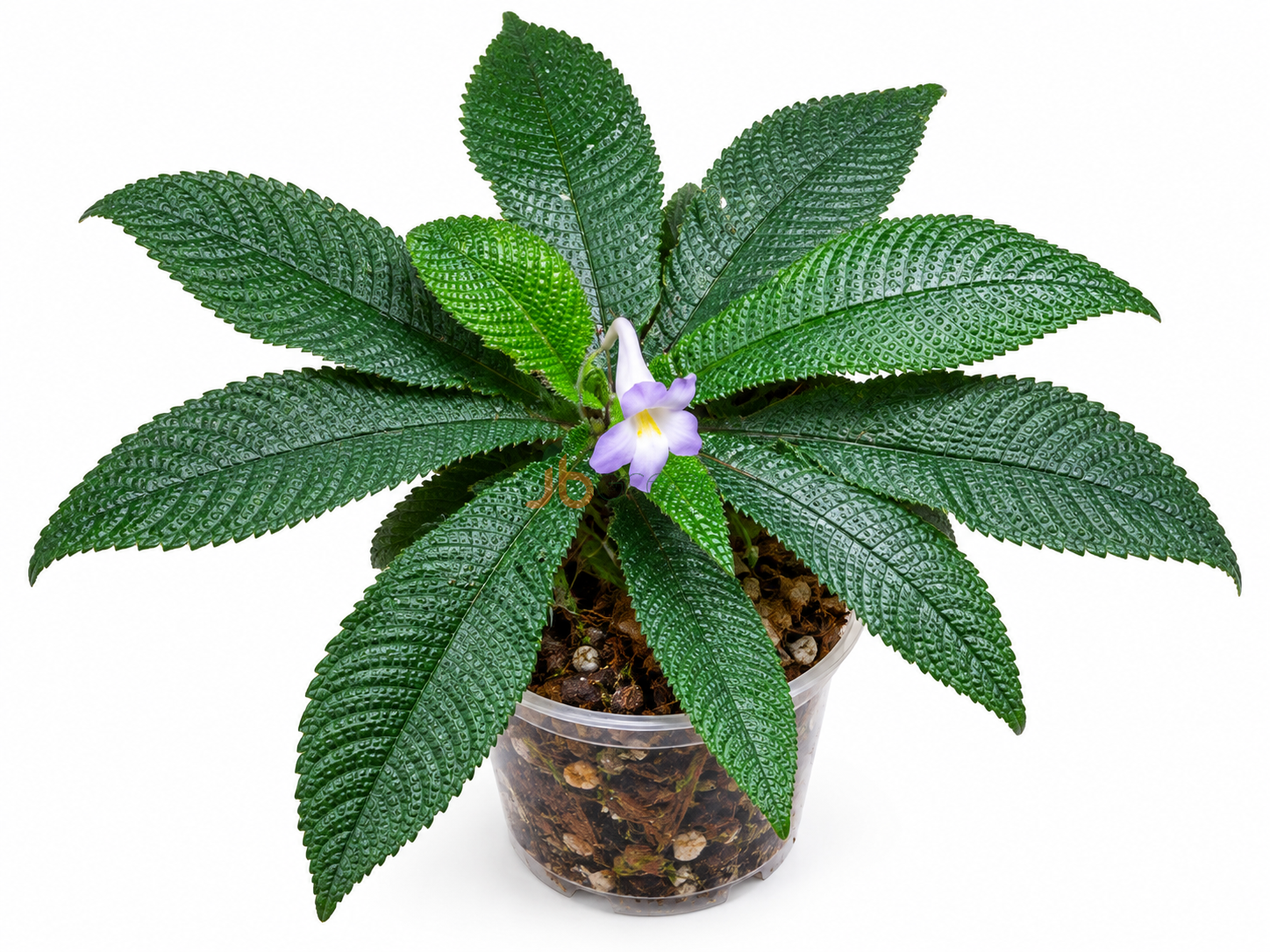
Elevate your indoor jungle or specialized glass setup with one of the most stunning and elusive treasures of the tropical understory: Codonoboea platypus. Formerly classified under Didymocarpus and Henckelia, this mesmerizing subshrub is a crown jewel for plant connoisseurs. Prized for its exquisite foliage texture and charming habit, it brings a slice of the untouched Southeast Asian rainforest directly into your collection.
🧬 Taxonomy & Family Tree
-
Kingdom: Plantae
-
Clade: Tracheophytes $\rightarrow$ Angiosperms $\rightarrow$ Eudicots $\rightarrow$ Asterids
-
Order: Lamiales
-
Family: Gesneriaceae (The Gesneriad Family, famous for African Violets and Gloxinias)
-
Genus: Codonoboea
-
Species: Codonoboea platypus (C.B.Clarke) C.L.Lim
🔍 Discovery, Naming & History
-
Who Found & Named It: Originally collected and scientifically described by the renowned British botanist Charles Baron Clarke (C.B. Clarke), a leading authority on nineteenth-century Indian and Malesian botany, who initially named it Didymocarpus platypus in 1883. It was later transferred to the genus Codonoboea by botanist C.L. Lim in 2011 following comprehensive molecular and morphological revisions of the Gesneriaceae family.
-
Where It Is Normally Found: Native to the wet tropical biomes of Peninsular Thailand, Peninsular Malaysia (Malaya), and Sumatra. In nature, it thrives exclusively as a shade-loving understory dweller, hugging damp rocky slopes, riverbanks, and nutrient-rich floor soils inside primary lowland and hill rainforests.
✨ Features & Identification Methods
-
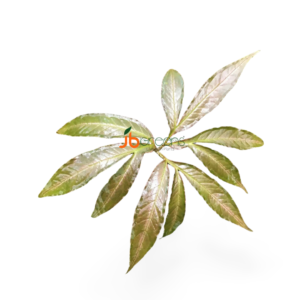
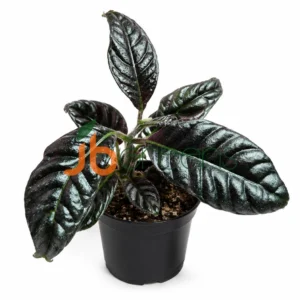
Foliage: Features lush, velvety to thinly leathery, beautifully patterned leaves that often crowd near the apex of the stem. The leaf blades showcase deep, rich green hues with remarkable vein structures.
-
Growth Habit: A compact, woody-based subshrub or perennial herb growing in neat, clustered rosettes or short, upright stems.
-
Flowers: Produces delicate, tubular, bell-shaped (campanulate) blooms—often in soft lavender, pale purple, or white shades—nestled elegantly against the dark foliage.
-
Identification Keys: Distinguished from other Gesneriads by its unique pubescence (hair structure) on stems and petioles, paired or clustered cyme inflorescences arising from upper leaf axils, and slender, cylindrical seed capsules that split open gracefully when mature.
💧 Comprehensive Care Guide
| Parameter | Optimal Requirement |
| Lighting | Low to Bright Indirect Light. Absolutely no direct sun, which will scorch its delicate leaves. Perfect for shaded indoor corners or under LED grow lights. |
| Watering | Consistently Moist. Never allow it to dry out completely. Water with filtered, room-temperature water whenever the top layer of media begins to feel slightly dry. Avoid waterlogging. |
| Humidity | High (70%–90%+). This is non-negotiable for optimum health. Ideal for closed environments like terrariums or cabinet greenhouses. |
| Temperature | Tropical warmth ($18^\circ\text{C}$ to $28^\circ\text{C}$ / $65^\circ\text{F}$ to $82^\circ\text{F}$). Protect from cold drafts and sudden temperature drops. |
🌱 Potting Media & Repotting Requirements
-
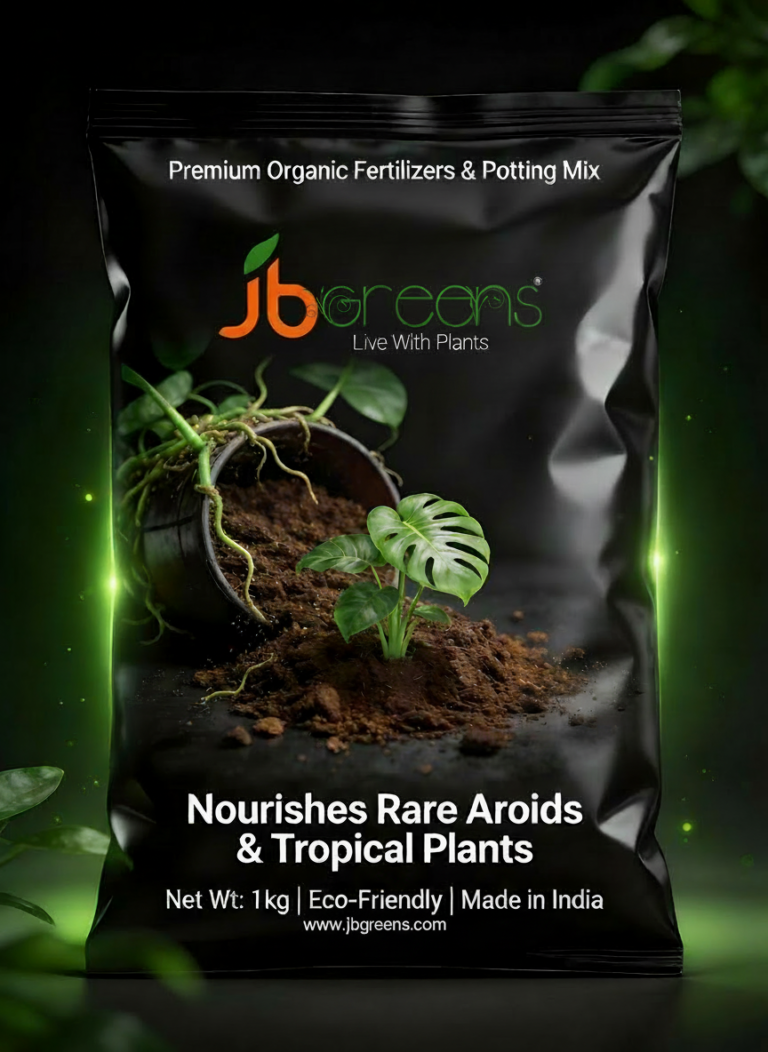
The Ideal Potting Media: Codonoboea platypus demands an airy, highly moisture-retentive yet exceptionally well-draining substrate. We strongly recommend pairing it with www.jbgreens.com’s Specialized Premium Potting Media Mix, expertly formulated with organic matter, perlite, sphagnum peat, and coco coir to mimic natural forest humus.
-
Repotting: Because of its modest root system and slow growth rate, it only needs repotting every 1.5 to 2 years. Choose shallow pots or containers that allow room for its creeping rootstock, and always repot during the active spring growing season.
🧪 Nutrient Requirements & Plant Tonics
-
Feeding: Feed sparingly during spring and summer with a diluted, balanced liquid fertilizer formulated for indoor foliage or Gesneriads (at quarter strength).
-
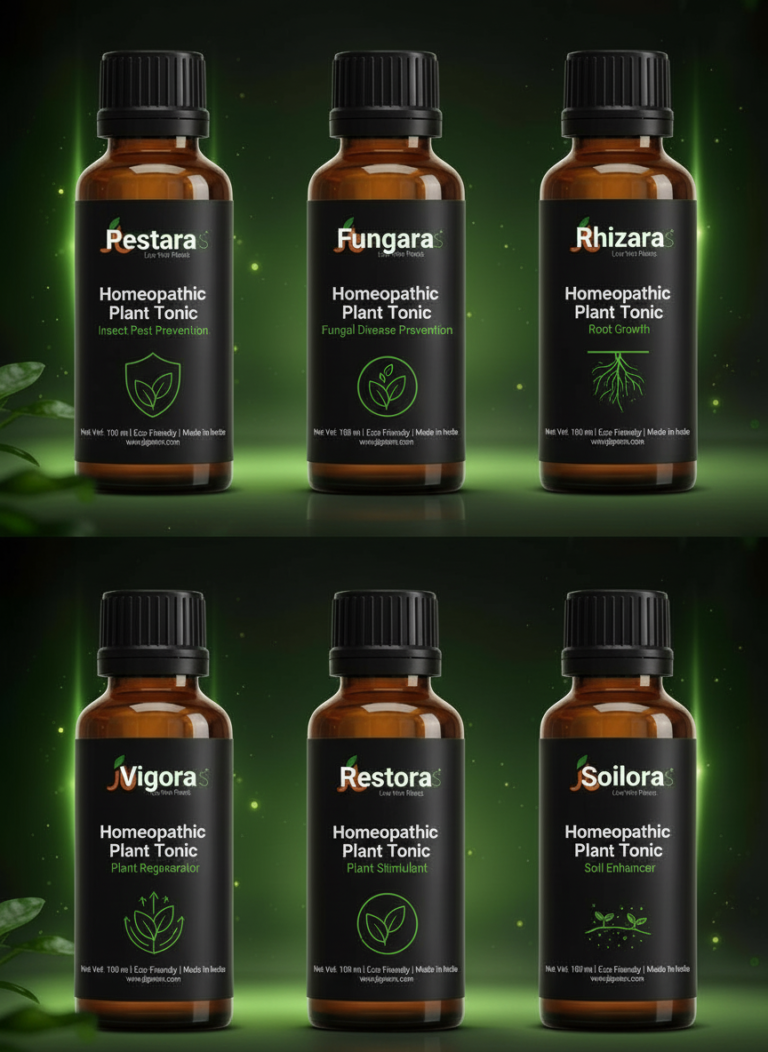
Boost Growth with JBGreens: Give your plant an extra edge of vitality by utilizing www.jbgreens.com’s Organic Plant Tonics and Root Enhancers. These tonics supply vital micronutrients and natural biostimulants that supercharge root development, heighten leaf coloration, and safeguard against transplant shock.
🧪 Terrarium & Paludarium Suitability
“Codonoboea platypus is nothing short of a masterpiece for closed ecological builds.”
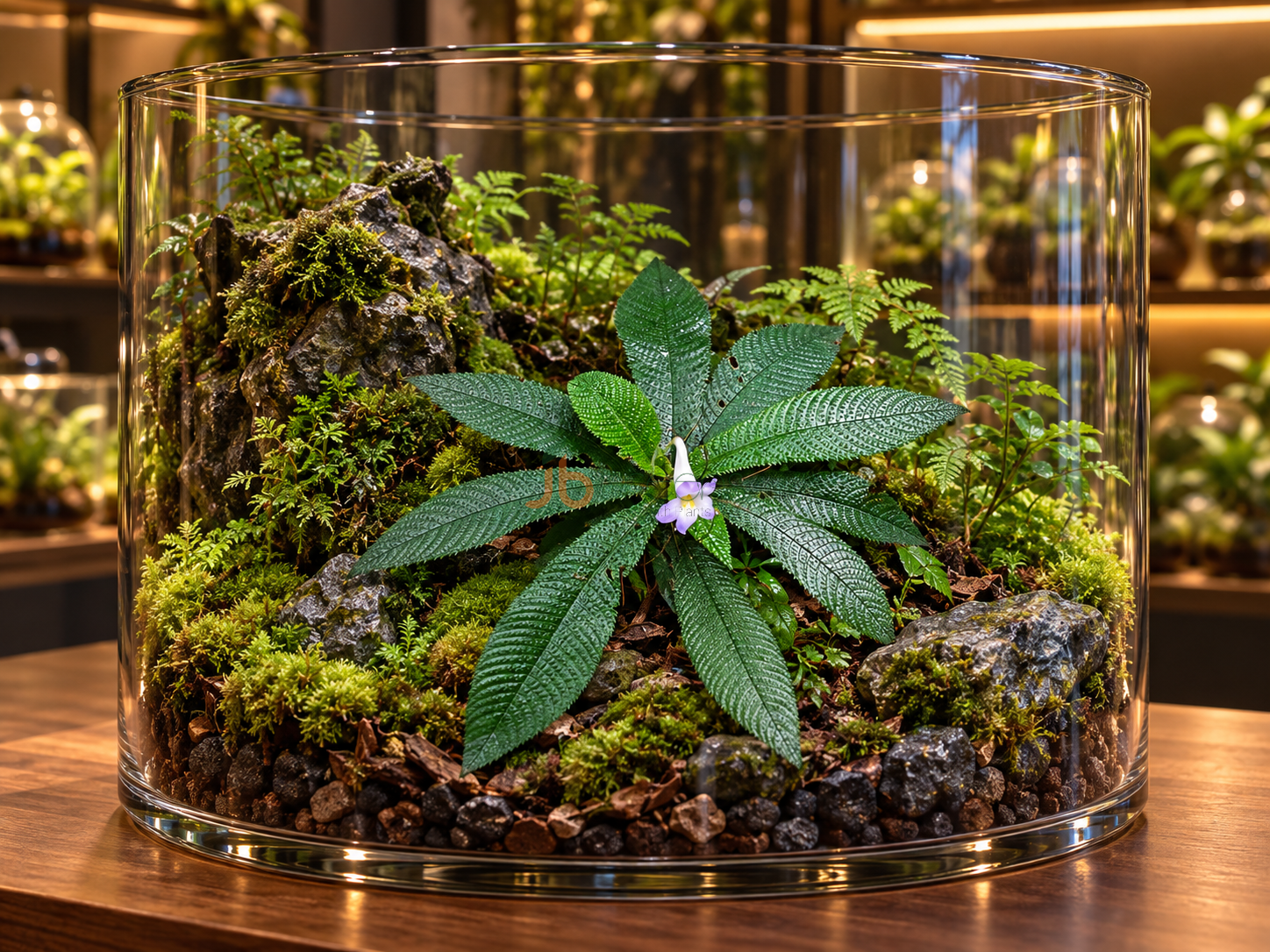
Due to its compact size, love for high atmospheric moisture, and aversion to dry indoor air, it is an absolute star performer for terrariums and paludariums.
-
Terrarium Placement: Plant it on the mid-ground layer or slope it gracefully against damp wood or background moss elements where it can absorb ambient condensation.
-
Paludarium Placement: Position it on land features, waterfall edges, or riparian zones where humidity stays near saturation, ensuring the root base remains damp without sitting in stagnant, muddy pools.
🛒 Why Buy From www.jbgreens.com?
At www.jbgreens.com, we hand-propagate and acclimatize rare botanical gems like Codonoboea platypus with utmost care and scientific precision. When you shop with us, you are guaranteed healthy, pest-free specimens backed by professional guidance. Don’t forget to stock up on our custom Potting Media and exclusive Plant Tonics available on the site to give your rare collection the royal treatment it deserves!
Would you like to adjust the tone of this description, or focus on specific pricing and sizing details for your website listing?




Reviews
There are no reviews yet.