
Tiny oak-shaped foliage for living glass worlds.
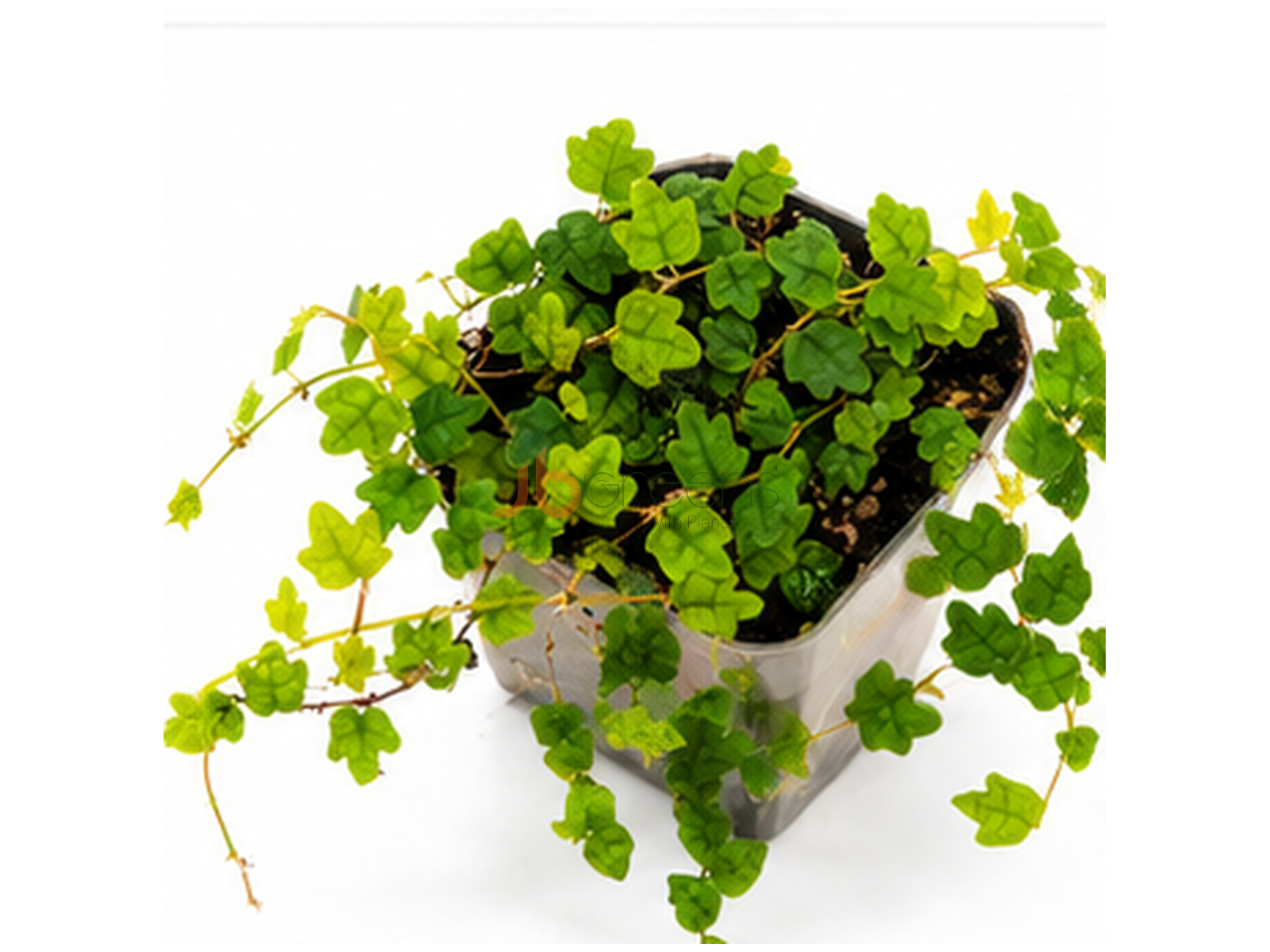
Bring the quiet magic of a miniature tropical forest floor to your collection with Ficus quercifolia—affectionately known among terrarium enthusiasts as the Oakleaf Creeping Fig or String of Frogs. Prized for its dainty, deeply lobed leaves that mirror miniature oak foliage, this evergreen creeping vine carpets driftwood, lava rock, and moss walls with effortless natural elegance. Conventionally and organically grown at our Bengaluru nursery, each plant is raised with patience and care to thrive in humid tropical setups.
Quick Botanical Profile
-
Scientific Name: Ficus pumila ‘Quercifolia’ (widely traded in horticulture as Ficus quercifolia)
-
Common Names: Oakleaf Creeping Fig, Miniature Oak Leaf Fig, String of Frogs
-
Family: Moraceae (the Fig and Mulberry family)
-
Life & Growth Habit: Long-lived evergreen perennial creeping and climbing vine (liana). With steady humidity and light pruning, it thrives indoors for years, spreading across surfaces via fine aerial rootlets.
-
Native Habitat (Where It Is Normally Found): The species originates from the warm, humid tropical and subtropical forests of East and Southeast Asia—including southern China, Japan, Taiwan, and Indochina—where it naturally creeps across damp tree bark, shaded forest floors, and mossy rocks.
Discovery & Naming History
Understanding the botanical name of this plant adds to its charm for collectors:
-
The Parent Species (Ficus pumila): First formally described and named by the renowned Swedish botanist Carl Linnaeus in Species Plantarum in 1753. The Latin epithet pumila means “dwarf,” referring to its tiny juvenile leaves.
-
The Varietal Name (Quercifolia): Derived from Latin Quercus (oak) and folium (leaf), celebrating its miniature oak-leaf silhouette.
-
Botanical Note on the Name Ficus quercifolia: In classical botany, the standalone binomial Ficus quercifolia was historically published by Carl Ludwig Blume in 1825 (now a synonym of Ficus sinuata Thunb.) and by William Roxburgh in Flora Indica in 1832 (now a synonym of Ficus montana Burm.f., originally named by Nicolaas Laurens Burman in 1768). In the modern terrarium and rare-plant hobby, however, Ficus quercifolia refers to the compact, oak-leaved creeping fig (Ficus pumila ‘Quercifolia’).
What Makes Ficus quercifolia Special? (Speciality & Features)
-
True-to-Scale Miniature Foliage: Unlike standard Ficus pumila, which can quickly outgrow small enclosures, the quercifolia form stays remarkably compact with delicate leaves measuring under 1–1.5 cm.
-
Self-Clinging Aerial Roots: Its slender vines produce fine adhesive roots that secrete a natural latex, allowing the plant to grip seamlessly onto cork bark, driftwood, xaxim, and damp stone without ties.
-
Dense, Sculptural Carpet: Overlapping leaves and tight internodes create a lush, woodland texture that looks established and aged far faster than slower epiphytes.
-
Vivarium-Friendly: Widely used as a safe, durable living backdrop in bioactive reptile, amphibian, and dart frog enclosures.
How to Identify Genuine Ficus quercifolia
Because standard creeping fig is sometimes mislabeled in the market, look for these reliable identification markers:
-
Distinctly Lobed Margins: True Ficus quercifolia has serrated, wavy, oak-shaped lobes on every leaf. If the leaves are smooth-edged, heart-shaped, or plain ovals, it is standard Ficus pumila.
-
Micro Leaf Size: Even as the vine matures in a terrarium, individual leaves remain tiny (around 0.5–1.5 cm).
-
Tight Internode Spacing: Leaves sit closely along fine, wiry stems, forming a tight, lacy mat rather than long, sparse runners.
-
Milky Sap: Like all members of the Moraceae family, a freshly snipped stem releases a tiny drop of white milky latex (handle gently, as Ficus sap can irritate sensitive skin).
Uses in Terrarium & Paludarium Setups
Ficus quercifolia is a cornerstone species for naturalistic aquascaping and vivarium design:
-
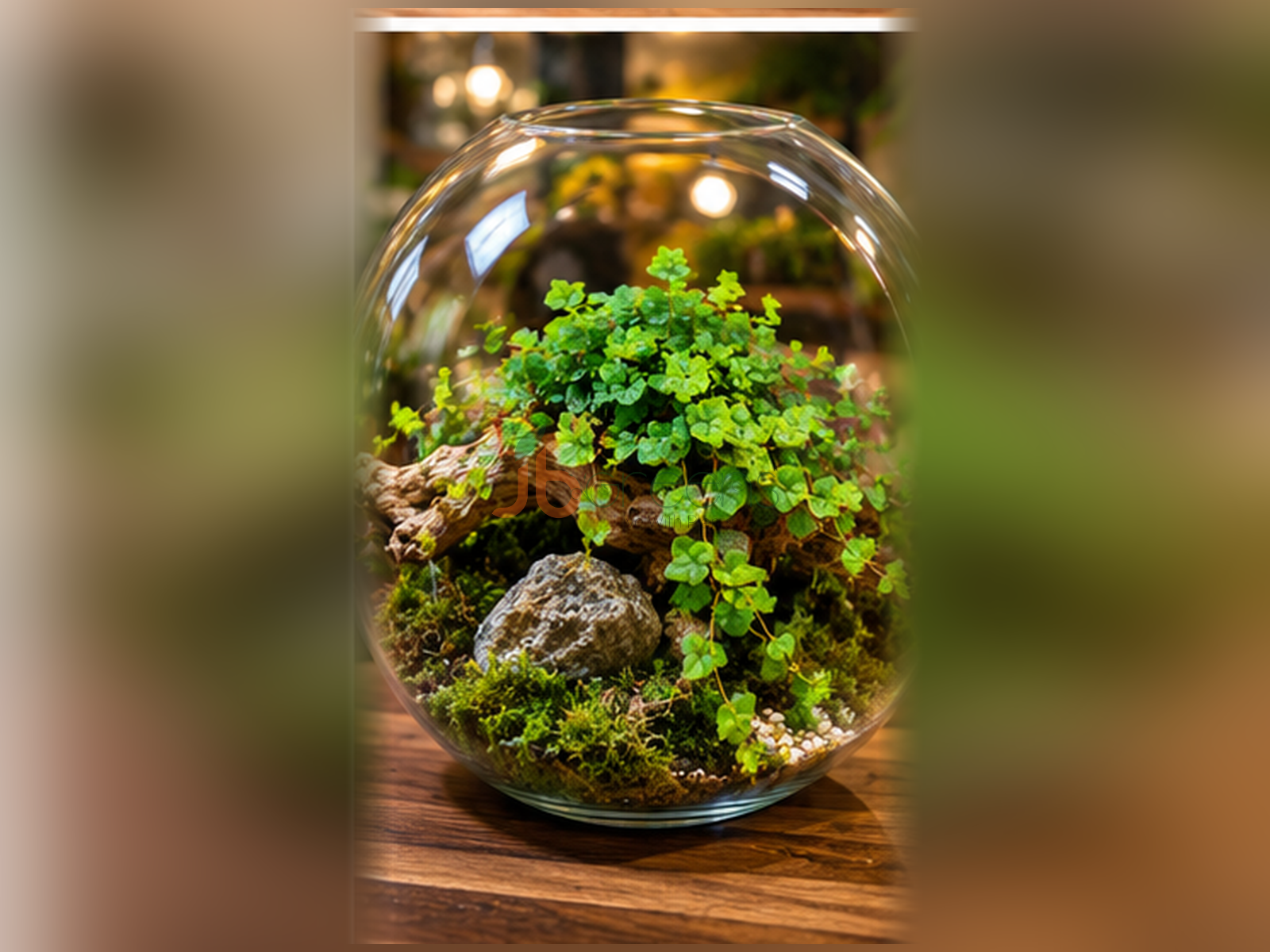
Closed & Bioactive Terrariums: Thrives in high-humidity glass vessels, carpeting the foreground or cascading gracefully down hardscape ledges.
-
Paludariums & Moss Walls: Excels in the emergent humid zone above the waterline, weaving effortlessly through damp driftwood, lava rock, and moss backgrounds.
-
Companion Planting: Pairs beautifully with tropical mosses, Selaginella, Marcgravia, miniature Begonia, Labisia, and jewel orchids, offering fine-leaf textural contrast against broader, velvety foliage.
Complete Care Guide
Lighting Requirements
-
Ideal: Bright, indirect light or full-spectrum terrarium LED lighting.
-
Tolerance: Adapts well to low-to-medium light, though very low light can cause leggy, stretched growth.
-
Avoid: Harsh direct sunlight, which quickly scorches its thin, delicate foliage.
Watering
-
Keep the substrate consistently and evenly moist, never bone-dry and never waterlogged.
-
Allowing the root zone to dry out completely causes rapid leaf crisping and dieback, while standing water leads to root rot.
-
Use filtered, RO, or rainwater when misting glass enclosures to avoid mineral spots on the leaves and glass.
Humidity & Temperature
-
Humidity: 60–90% is ideal. High, stable humidity encourages dense carpeting, richer green tones, and active aerial rooting. It struggles in dry open-room air unless placed in a terrarium, cloche, or humidity cabinet.
-
Temperature: 18–28 °C. Protect from cold drafts and temperatures dropping below 15 °C.
Potting & Growing Media
-
Ficus quercifolia requires a light, airy, moisture-retentive, yet well-draining substrate rich in organic matter—such as a balanced blend of coco peat, sphagnum moss, fine bark, horticultural charcoal, and perlite.
-
JB Greens Recommendation: Give your vines a strong, breathable root foundation with our nursery-crafted Growing Media Collection at www.jbgreens.com. Our specialized tropical and terrarium potting mixes are formulated to balance steady moisture retention with essential root aeration.
Nutrient Requirements
-
This miniature climber is a light feeder and does not require heavy fertilization.
-
During active growth, support vibrant foliage and steady root establishment with gentle, diluted organic nutrition.
-
JB Greens Recommendation: Complement your routine with our Plant Tonics Collection at www.jbgreens.com. (Please read individual formulation labels, dilution directions, and suitability before use—tonics support a healthy routine alongside proper light, watering, and growing media.)
Repotting & Pruning
-
Repotting: Because of its fine, shallow root system, Ficus quercifolia rarely needs frequent repotting. Refresh the potting mix every 12–18 months if grown in a pot, or whenever the substrate breaks down and loses aeration. Always choose a shallow pot with drainage holes or a proper false-bottom drainage layer in closed terrariums.
-
Pruning & Propagation: Light, occasional trimming keeps growth bushy and prevents it from shading slower neighbors. Every snipped stem with a node can be laid directly onto damp sphagnum moss in a humid container to root quickly into new plants.
Complete Your Setup at JB Greens
-
Shop Growing Media: Explore our curated tropical and terrarium potting mixes at www.jbgreens.com to give your Ficus quercifolia the ideal aerated, moisture-balanced root zone.
-
Shop Plant Tonics: Browse our Plant Tonics to gently nourish your terrarium flora and support lush, resilient growth.
-
Plan Your Layout: Visualize Ficus quercifolia alongside mosses, ferns, and rare foliage in our Terrarium Studio before you plant.






Reviews
There are no reviews yet.