
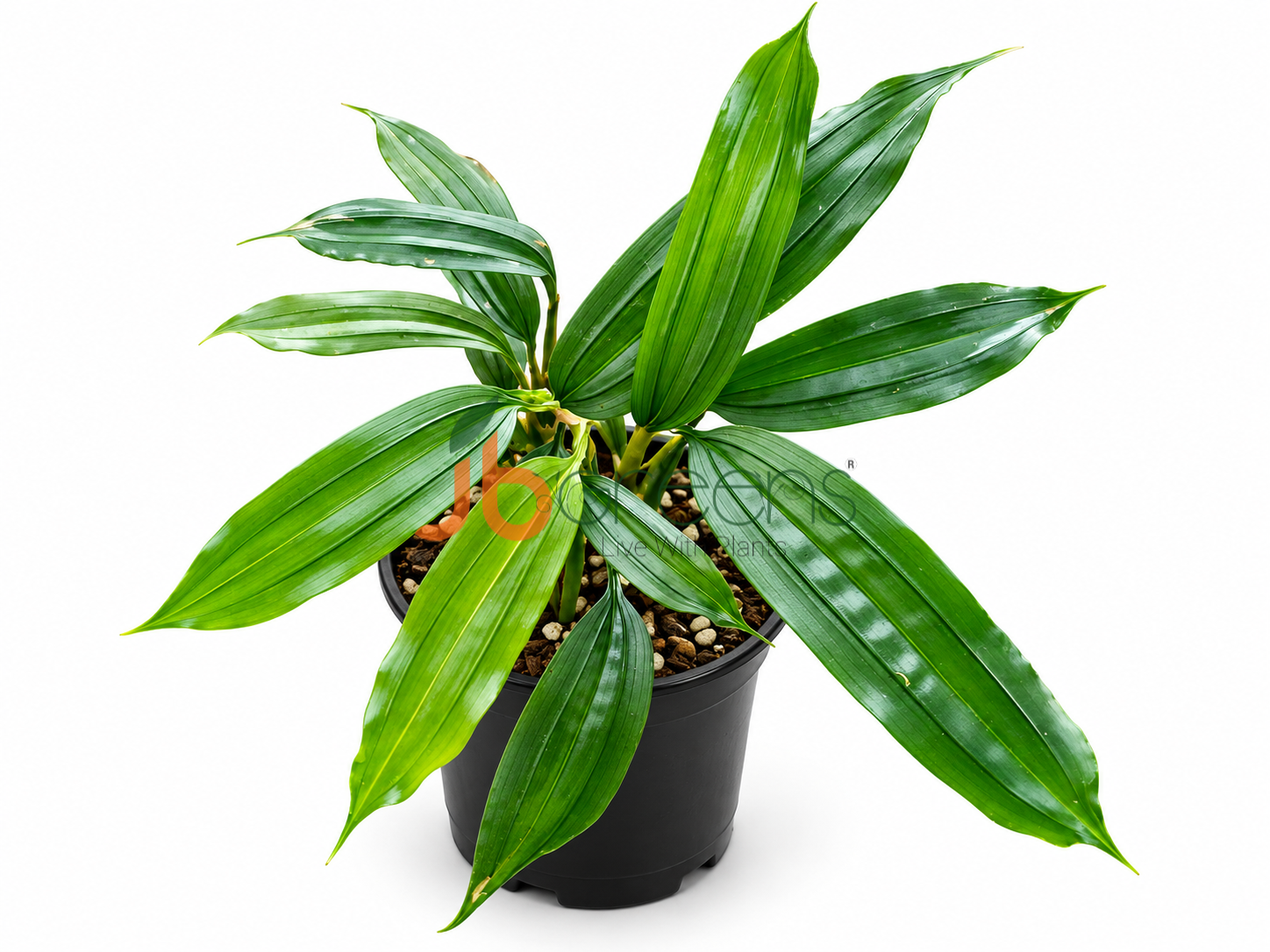
Mapania cuspidata is a plant species in the genus Mapania, which belongs to the Cyperaceae family.
It is native to tropical regions from Thailand to New Guinea.
The plant features a compact, stem-forming growth habit.
The lower leaves form an elegant fan shape, while the upper foliage arches with tiny clustered flower stalks borne along the stems.
It is considered a terrestrial plant, often found in humid, shaded tropical environments.
Locally in Singapore, it is classified as vulnerable.
Care
Water: Keep the soil moist but avoid saturation. It thrives in consistent moisture conditions.
Light: Prefers bright indirect light or dappled shade, rather than direct sunlight which may harm the plant.
Humidity: Requires high humidity levels, ideally 70-90%, reflecting its natural tropical habitat.
Soil: Performs well in very coarse, porous media such as a mix with high-quality perlite or pumice pebble, suitable for terrariums or humid greenhouses.
Propagation is difficult, typically done by rhizome divisions rather than by seeds, and thus it is not commonly grown commercially.
Adaptability
It adapts well to terrarium environments or humid greenhouse settings where its moisture and humidity requirements can be met.
It is less suited for dry or low-humidity conditions and needs a stable environment to flourish.
Due to its difficult propagation and slow growth, it is rarely grown in conventional garden settings but can be enjoyed in controlled indoor conditions that mimic its native tropical forest understorey.
Growing Conditions
Tropical climate, native to Southeast Asia and nearby islands.
Prefers shaded or semi-shaded areas under a forest canopy or artificial shade.
Consistent moisture availability without waterlogging.
High humidity and good air circulation.
Does well in terrariums or small humid pots with suitable drainage.
Slow growing and requires careful handling due to propagation challenges.
In summary, Mapania cuspidata is a delicate tropical plant that demands careful attention to moisture, shade, and humidity. It is best suited for terrarium or humid greenhouse cultivation where its natural growing conditions can be replicated. It grows slowly, with compact, aesthetically pleasing foliage that fans out, requiring porous soils and stable tropical-like conditions for optimal health and growth.
Only logged in customers who have purchased this product may leave a review.
Related products
-
ABOUT THE PLANT: Indonesia endemic plant The photo is representative Plant in the good condition and healthy It is sold per plant Mapania is a genus of plants in the family Cyperaceae. It contains around 60-70 species, distributed in tropical regions of Africa, India, southern China, Southeast Asia, New Guinea, Australia, Central America, northern South America, …
Add to cart

Products
-
 Anthurium BVIT* Docblock
Original price was: ₹9,600.00.₹8,650.00Current price is: ₹8,650.00.
Anthurium BVIT* Docblock
Original price was: ₹9,600.00.₹8,650.00Current price is: ₹8,650.00.
-
 Labisia Star Light
Original price was: ₹2,200.00.₹1,650.00Current price is: ₹1,650.00.
Labisia Star Light
Original price was: ₹2,200.00.₹1,650.00Current price is: ₹1,650.00.
-
 Ardisia Odontiphollia
Original price was: ₹2,200.00.₹1,650.00Current price is: ₹1,650.00.
Ardisia Odontiphollia
Original price was: ₹2,200.00.₹1,650.00Current price is: ₹1,650.00.
-
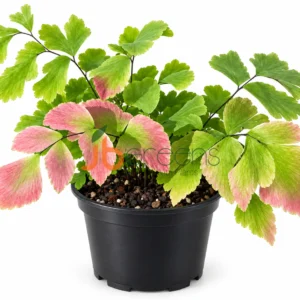 Microphyllum Verigated
Original price was: ₹1,600.00.₹1,400.00Current price is: ₹1,400.00.
Microphyllum Verigated
Original price was: ₹1,600.00.₹1,400.00Current price is: ₹1,400.00.
-
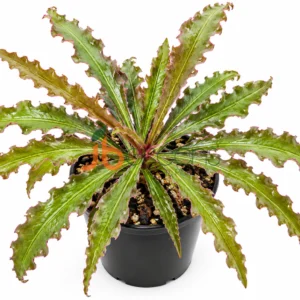 Labisia Fenny
Reviews
There are no reviews yet.