
Welcome to the ultimate botanical profile for Pinguicula ‘Weser’_—a breathtaking, jewel-toned hybrid butterwort that bridges the gap between delicate succulent aesthetics and fascinating carnivorous utility. Crafted specifically for presentation on www.jbgreens.com, this text blends professional horticulture with compelling marketing language to captivate plant enthusiasts, terrarium hobbyists, and rare flora collectors alike.
Pinguicula ‘Weser’ – The Gemstone Butterwort
Transform your indoor jungle, terrarium, or carnivorous collection with one of the most exquisite and rewarding carnivorous plants in cultivation: Pinguicula ‘Weser’.
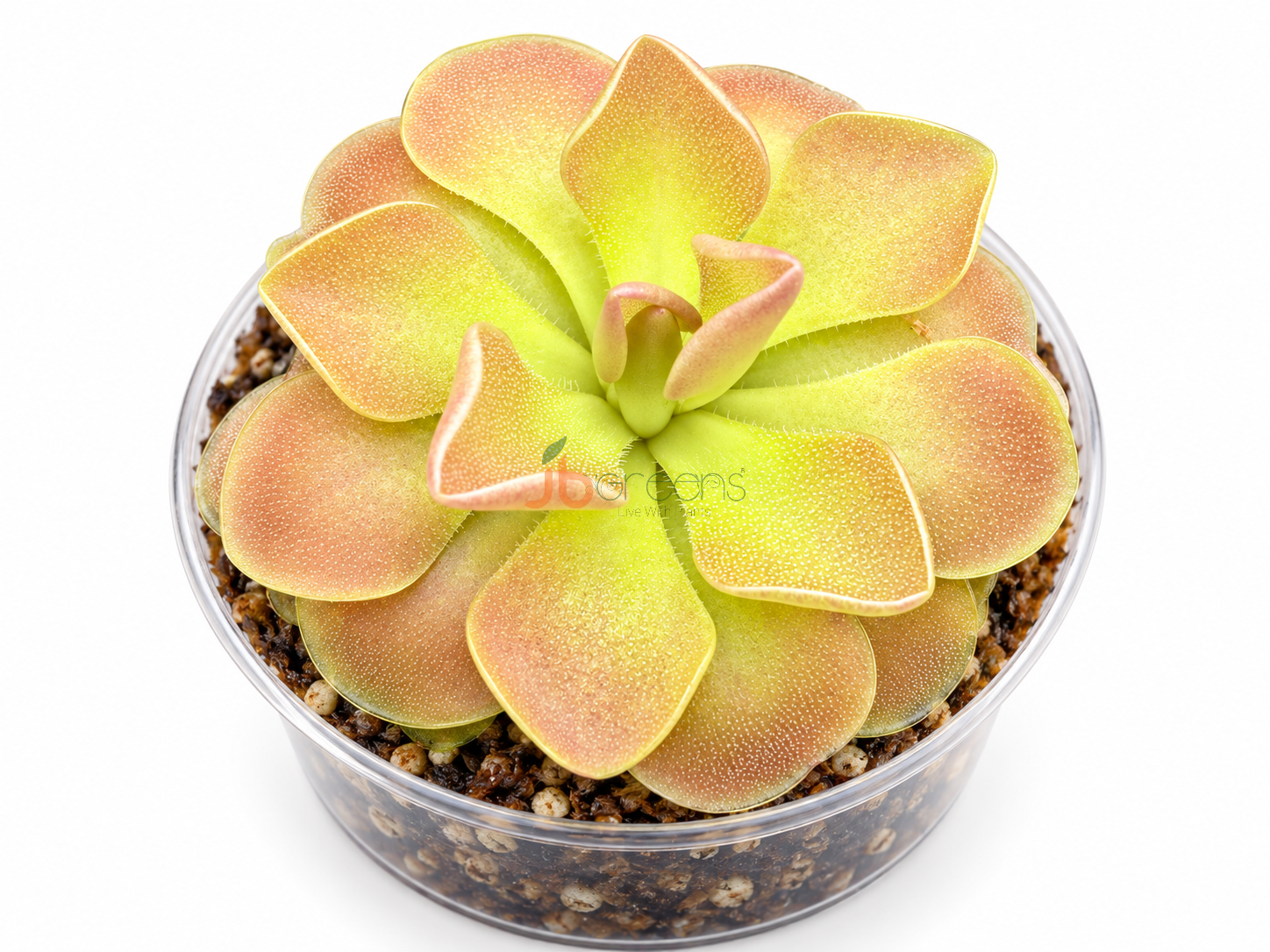
Renowned for its striking, succulent-like rosettes of blush-pink to pale green leaves blanketed in glistening mucilage glands, this plant looks more like an ethereal desert rose than a fierce hunter. Yet, beneath its charming exterior lies a silent, highly efficient predator capable of keeping annoying fungus gnats and fruit flies at bay with botanical elegance.
1. Botanical Classification & Family
-
Family: Lentibulariaceae (The Bladderwort family)
-
Genus: Pinguicula (Butterworts)
-
Lineage/Origin: Pinguicula ‘Weser’ is a famous horticultural hybrid created by crossing Pinguicula moranensis and Pinguicula ehlersiae—both native to the limestone-rich, mountainous regions of Mexico.
2. Distinctive Features & Identification
-
The Rosette & Foliage: Forms a tight, symmetrical, flat rosette. The succulent leaves are broad, smooth-edged, and tinted in soft pastel greens that flush a lovely candy-pink or rose color when exposed to optimal bright light.
-
The Glistening Trap: Under a magnifying glass, the upper surface of each leaf reveals two types of microscopic glands: stalked glands that secrete a sticky, glistening glue (resembling morning dew drops) to trap small insects, and sessile glands that release digestive enzymes to break down captured prey.
-
The Blooms: When mature and happy, it produces stunning, long-stemmed, orchid-like flowers featuring five symmetrical petals in a vibrant, deep violet-pink shade with a contrasting white throat and a delicate central spur.
3. History, Discovery & Naming
While wild species of Mexican butterworts have centuries of botanical documentation, the specific hybrid ‘Weser’ was bred in cultivation during the late 20th century by European horticulturists seeking a resilient, vigorous plant with showier flowers and a pronounced pink blush. It was named after the Weser River region in Germany, honoring the historic European nurseries that popularized its distribution worldwide.
4. Habitat & Natural Lifestyle
In their ancestral Mexican habitats, these butterworts grow on steep, nutrient-poor, damp limestone cliffs, rocks, and mossy banks. They experience two distinct natural seasons:
-
The Wet Summer Season: Active growth phase where they absorb moisture and nutrients via roots and digest insects on their leaves.
-
The Dry Winter Season: A dormancy phase where the plant sheds its carnivorous leaves, shrinking into a compact, non-carnivorous rosette of tiny succulent leaves to survive drought. (Note: In home environments with steady warmth and artificial light, many ‘Weser’ plants can be coaxed to skip strict dormancy).
5. Comprehensive Care & Cultivation Guide
Lighting Requirement
-
Bright, Indirect to Moderate Direct Light: To achieve that iconic, blush-pink coloration, provide 4 to 6 hours of bright, indirect sunlight or place them under high-output LED grow lights. Avoid scorching afternoon sun in hot climates, which can bleach or burn the delicate mucilage glands.
Watering & Hydration
-
Purity Matters: Never use tap water heavy in minerals or chlorine, as dissolved salts will kill carnivorous plants. Always use distilled, reverse osmosis (RO), or rainwater.
-
The Tray Method: Keep the potting media consistently moist during the active growing season. Place the pot in a shallow tray containing about 1 inch of pure water. Allow the water level to drop slightly before refilling, or let the top layer dry out just a fraction between waterings to prevent root rot.
Humidity Requirements
-
Moderate to High (40% – 70%): While standard indoor humidity (around 40-50%) is tolerated well because of their succulent leaves, they thrive exceptionally well in higher humidity environments, making them absolute stars for closed or semi-closed setups.
Nutrient Requirements
-
Zero Fertilizer Required: Do not fertilize the soil or roots. Carnivorous plants have evolved to derive all their nitrogen, phosphorus, and potassium from the insects they catch. Feeding roots chemical fertilizers will quickly burn and kill the plant.
6. Potting & Repotting
The Ideal Potting Media
Because standard potting soil contains too many nutrients and organic fertilizers, butterworts require an airy, nutrient-free, highly well-draining substrate.
-
The www.jbgreens.com Standard: For peak vitality, we recommend planting your Pinguicula in our specialized JB Greens Carnivorous Plant Custom Mix—a precise, pre-blended substrate featuring high-grade white perlite, fine horticultural quartz sand, silica, and nutrient-free peat/long-fiber sphagnum moss tailored specifically to mimic Mexican limestone cliff conditions.
Repotting Guidelines
-
Repotting is best done in early spring just as active growth resumes. Because they have shallow, delicate root systems, choose a small, wide plastic pot (around 2 to 4 inches wide). Gently slide the root ball out, brush away exhausted media, and set it firmly into fresh JB Greens mix without burying the center growing crown too deep.
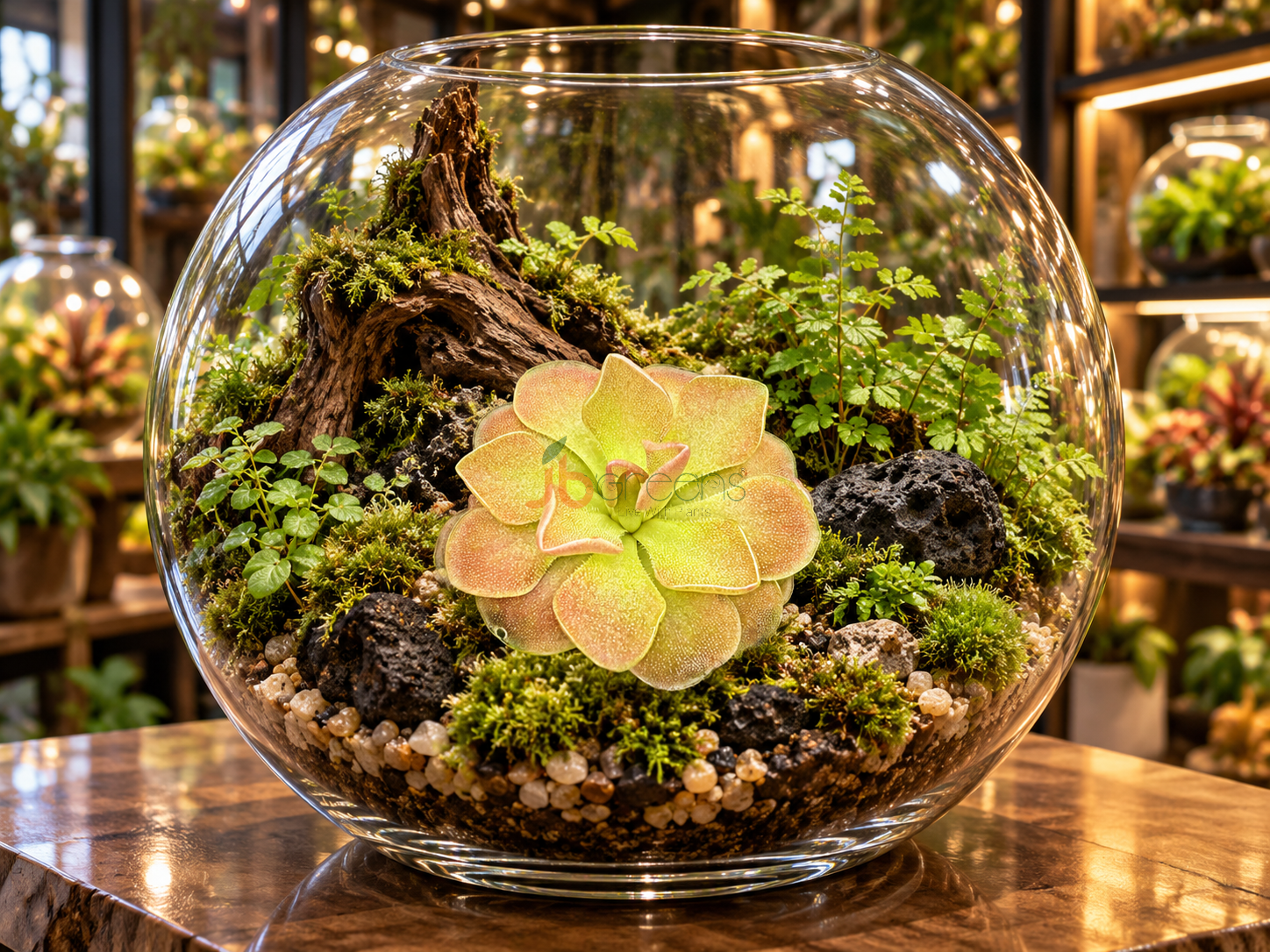
7. Speciality: Perfect for Terrariums and Paludariums!
Are you building a bioactive vivarium, rainforest terrarium, or a lush paludarium? Pinguicula ‘Weser’_ is one of the premier choices for scape designers:
-
Pest Control Powerhouse: Acts as a living, chemical-free guardian against fungus gnats, fruit flies, and whiteflies that often plague humid enclosures.
-
Non-Invasive Root System: Their compact, non-aggressive roots won’t disrupt landscape designs, rockwork, or delicate moss carpets.
-
Stunning Visual Contrast: Their pastel pink rosettes pop against dark driftwood, dark tropical leaf litters, and vibrant green epiphytic mosses.
Elevate Your Collection with JB Greens Essentials
Unlock the secret to lush, thriving carnivorous plants with professional products available right here at www.jbgreens.com:
-
JB Greens Premium Carnivorous Potting Media: Hand-blended, sterile, mineral-rich, and 100% free of added fertilizers—engineered to give your butterworts the exact drainage and stability they crave.
-
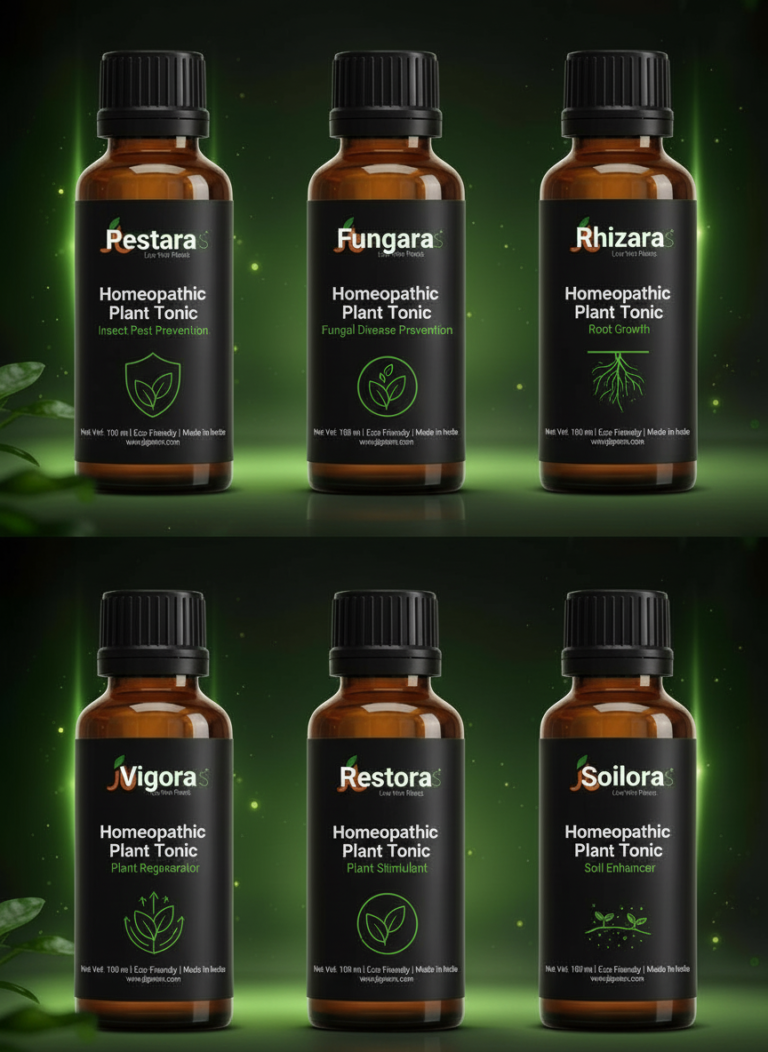
JB Greens Vitality Plant Tonic: Specially formulated organic micro-tonics and natural rooting enhancers designed to accelerate post-shipping recovery, boost root strength, and enhance vibrant coloration in rare botanical specimens.







Reviews
There are no reviews yet.