
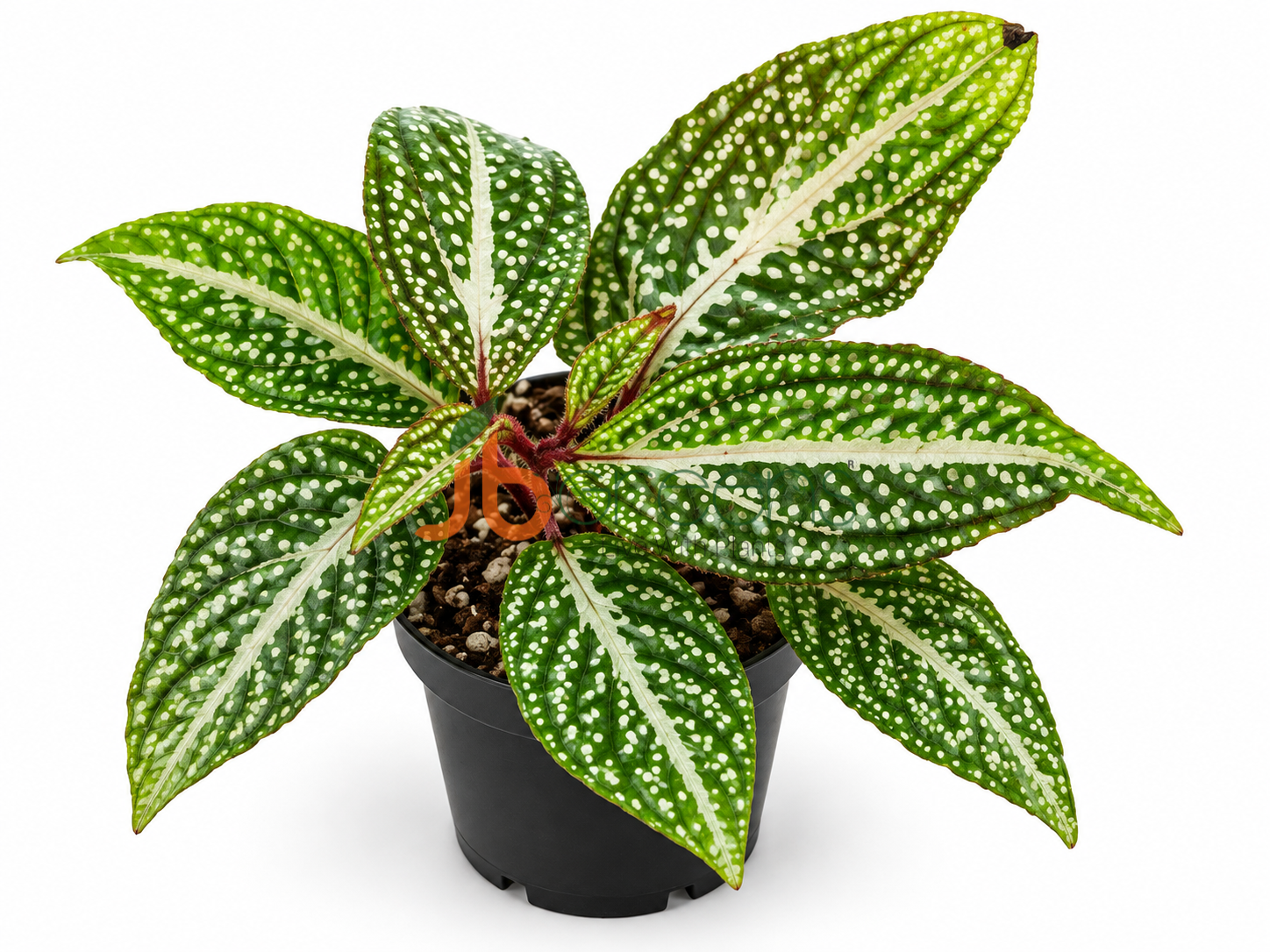
Sonerila maculata is a small, semisucculent herb in the Melastomataceae family, known for its attractive foliage and compact, clumping habit rather than showy flowers. It naturally grows in shaded, moist, tropical forest floors and is intermediate in difficulty as a house or terrarium plant, requiring careful attention to moisture, light, and humidity.
Morphology and general description
Sonerila maculata typically forms low, spreading clumps 15–30 cm tall, with prostrate to slightly erect stems that can root at the nodes. The stems are often 4‑sided, with a soft, velvety or glandular texture, and may produce short runners over time.
The leaves are usually obovate to elliptic, around 6 × 2–4.5 cm, with a papery to slightly succulent texture. They commonly carry small, pale “spots” or blotches on the upper surface, which are the origin of its maculata (spotted‑leaf) name. Leaf margins are finely toothed, each tooth tipped with a tiny bristle, and the veins are simple and somewhat inconspicuous.
Flowers and seasonality
Flowers are small and inconspicuous compared with the foliage, held in short, scorpoid cymes at the tips of the branches. The floral tube (hypanthium) is funnel‑shaped and 3‑sided, with 3 sepals and 3 petals, a typical feature of the Sonerila genus.
Petals are usually pale purple, oblong, and only a few millimeters long; anthesis is not strongly seasonal and may occur in short flushes through the warmer months, especially when the plant is grown under stable, humid, shaded conditions.
Growing conditions
Light
Sonerila maculata prefers bright, indirect light without any strong mid‑day sun. Morning sun filtered through a sheer curtain or a shaded glass roof is usually acceptable, but full afternoon sun will quickly scorch the thin leaves and cause crisp edges.
In cultivation, a north‑facing window, a shaded greenhouse side, or a spot under another taller plant that casts dappled shade works best; in very low light, growth becomes leggy and the stems may elongate weakly.
Temperature and humidity
As a wet‑tropical‑biome species, it grows best in warm‑to‑cool, intermediate temperatures rather than true hot or cold extremes. A comfortable range is roughly 18–26°C, with nighttime dips down toward 15–18°C tolerated if humidity and airflow are good.
High ambient humidity (around 70–80% or higher) is strongly preferred, making this plant well suited to terrariums, closed glass cases, or humid plant rooms. Dry air, especially in heated or air‑conditioned spaces, causes leaf edges to brown and new growth to stall.
Water and substrate
The plant likes to be kept evenly moist but not waterlogged, with the medium allowed to dry slightly at the surface between waterings. Overwatering or a compacted, soggy substrate quickly leads to stem rot, so drainage is critical.
A suitable mix is a loose, moisture‑retentive but highly aerated blend such as fine bark, coir or peat, and perlite or coarse sand, optionally with a small amount of live sphagnum moss. The substrate should hold moisture around the roots while remaining open‑textured, never dense or clay‑like.
Care and maintenance
Watering and feeding
Water when the top layer feels lightly dry, using soft water (rainwater or RO) if your local tap water is very hard or heavily chlorinated, as Sonerila species can be sensitive to mineral buildup.perfectplants+1
During active growth, feed very lightly with a balanced liquid fertilizer at about ¼–½ the label strength every 2–4 weeks; reduce or stop feeding in cooler or low‑light periods and periodically rinse the pot to flush out accumulated salts.
Pruning and shaping
Sonerila maculata can be lightly pruned to encourage branching and a denser mat, especially if stems become leggy or start to sprawl weakly. Pinching the tips stimulates side shoots, and any rooted stem cuttings can be separated and potted to form new clumps.flowersofindia+1
Regular removal of old, browned leaves or soft, rotting stems helps keep the plant tidy and reduces the risk of fungal issues in humid environments.
Adaptability and potential challenges
Adaptability
Within its preferred warm‑humid, filtered‑light niche, Sonerila maculata is fairly adaptable and can colonize sloping, shaded forest margins, rocky crevices, or even under orchard‑type canopies where the soil stays moist but not saturated.
In collections, it adapts well to terrariums, bottle gardens, and shaded shaded benches, as long as temperature extremes and very dry air are avoided; it generally does not tolerate full‑ sun beds or prolonged drought.
Typical problems
The main issues are drying out completely (which causes leaf scorch and collapse of new growth) and overwatering in a heavy mix (which leads to stem rot and soft, blackened bases). Low humidity and poor air circulation can also encourage mild fungal or bacterial spotting on leaves.aphylia+1
Pests such as aphids, spider mites, or scale are uncommon but can appear if the plant is stressed; keeping the stems clean and plants slightly spaced apart with gentle air movement helps minimize infestations.
Only logged in customers who have purchased this product may leave a review.
Related products
-
ABOUT THE PLANT: Indonesia endemic plant from Kalimantan It has 2-4 leaves The photo is representative Plant in the good condition and health It is sold per plant Sonerila is a genus of plants in the family Melastomataceae. This genus is characterized by presence of three petals (along with the genera Stussenia and Lithobium) as …
Add to cart -
ABOUT THE PLANT: Indonesia endemic plant from Kalimantan It has 2-4 leaves The photo is representative Plant in the good condition and health It is sold per plant Sonerila is a genus of plants in the family Melastomataceae. This genus is characterized by presence of three petals (along with the genera Stussenia and Lithobium) as …
Read more -
ABOUT THE PLANT: Indonesia endemic plant from West Kalimantan It has 2-4 leaves The photo is representative Plant in the good condition and health It is sold per plant Sonerila is a genus of plants in the family Melastomataceae. This genus is characterized by presence of three petals (along with the genera Stussenia and Lithobium) …
Read more -
ABOUT THE PLANT: Indonesia endemic plant from Kalimantan It has 2-4 leaves The photo is representative Plant in the good condition and health It is sold per plant Sonerila is a genus of plants in the family Melastomataceae. This genus is characterized by presence of three petals (along with the genera Stussenia and Lithobium) as …
Read more


Products
-
 Jewel Cheirostylis montana
Original price was: $20.05.$15.21Current price is: $15.21.
Jewel Cheirostylis montana
Original price was: $20.05.$15.21Current price is: $15.21.
-
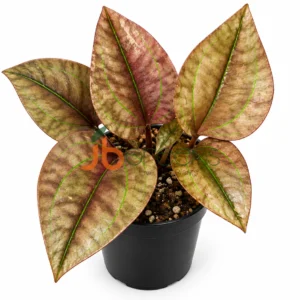 Orchid Nephelaphyllum Pulchrum
Original price was: $17.98.$13.14Current price is: $13.14.
Orchid Nephelaphyllum Pulchrum
Original price was: $17.98.$13.14Current price is: $13.14.
-
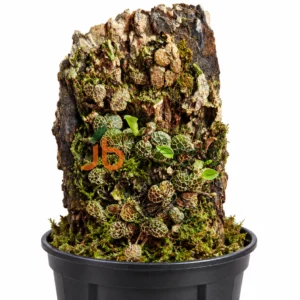 Porpax Reticulata
Original price was: $21.44.$17.98Current price is: $17.98.
Porpax Reticulata
Original price was: $21.44.$17.98Current price is: $17.98.
-
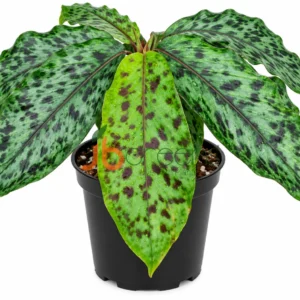 Etlingera brevilabrum
Original price was: $44.26.$38.72Current price is: $38.72.
Etlingera brevilabrum
Original price was: $44.26.$38.72Current price is: $38.72.
-
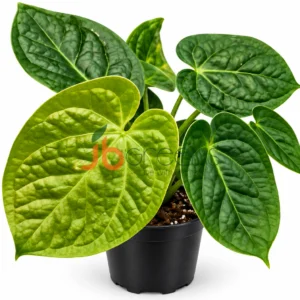 Anthurium Doraiki x Luxurians
Original price was: $62.24.$53.94Current price is: $53.94.
Anthurium Doraiki x Luxurians
Original price was: $62.24.$53.94Current price is: $53.94.


Reviews
There are no reviews yet.