
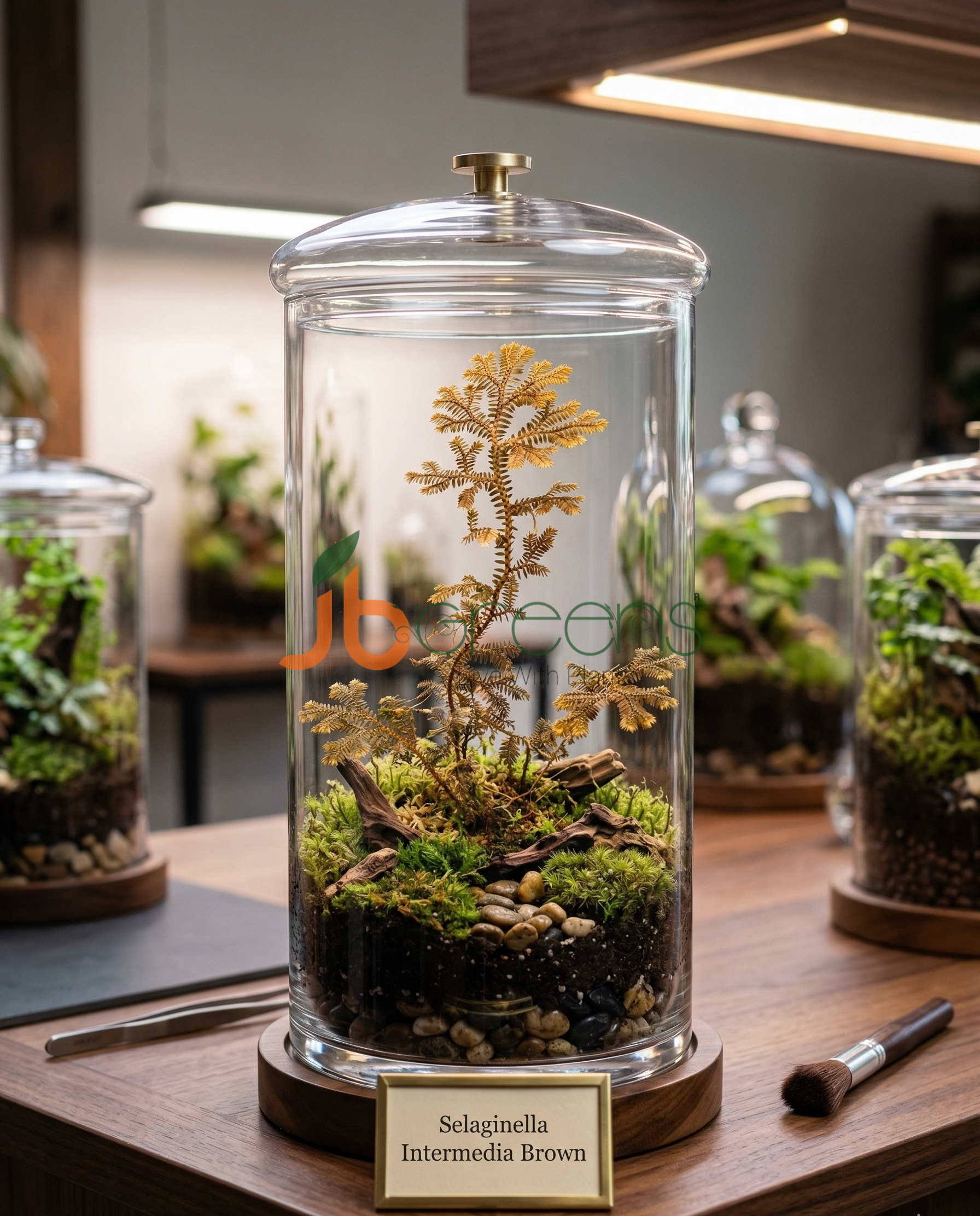
Bring the mystery of the deep rainforest floor to your indoor ecosystem.
Selaginella intermedia ‘Brown’ is a rare, collector-grade tropical spikemoss celebrated for its dramatic chocolate-brown to smoky-bronze foliage and delicate, miniature tree-like silhouette. Unlike everyday green groundcovers, this striking variety adds instant depth, contrast, and an ancient woodland aesthetic to glass terrariums, paludariums, and humid indoor displays.
Botanical Profile & History
-
Botanical Name: Selaginella intermedia (Blume) Spring
-
Common Names: Brown Spikemoss, Dark Clubmoss, Peacock Moss relative
-
Plant Family: Selaginellaceae (the sole family in the ancient spikemoss lineage of non-seed vascular plants, or lycophytes)
-
Who Found & Named It: The species was first scientifically described as Lycopodium intermedium by the renowned German-Dutch botanist Carl Ludwig Blume, and later reclassified under its accepted name, Selaginella intermedia, in 1843 by German-Belgian botanist Antoine Frédéric Spring.
-
Where It Is Normally Found: Native to the humid, shaded tropical rainforests of South and Southeast Asia—including India, Myanmar, Thailand, Vietnam, Peninsular Malaysia, Singapore, Borneo, the Philippines, Sumatra, Java, Sulawesi, and Maluku. In the wild, it thrives on damp woodland floors, humus-rich volcanic slopes, moss-covered boulders, and shaded stream banks.
-
Life & Growth Cycle: This is a perennial herbaceous plant that can live for many years in stable, humid conditions. Because it is a spore-bearing lycophyte rather than a flowering plant, it reproduces naturally through microscopic spores formed in tiny terminal cones (strobili), as well as vegetatively via creeping rhizomes.
Speciality & Key Features
-
Rare Dark Coloration: Its most prized speciality is its deep dark brown, bronze, and near-black foliage, often highlighted by soft cream or pale new growth tips.
-
Miniature Tree Habit: From a creeping ground rhizome, slender sub-erect stems rise 10–15 cm tall (occasionally taller in mature setups) and branch out at the top into a symmetrical, fern-like “crown” that looks like a tiny rainforest tree.
-
Color-Responsive Foliage: Selaginella intermedia ‘Brown’ develops its richest dark-brown tones under low-to-medium shade and steady nutrition. In overly bright light or nutrient-poor soil, new growth may shift toward green.
-
Non-Toxic: Generally reported as non-toxic, making it a popular choice for naturalistic bioactive enclosures.
How to Identify Selaginella intermedia ‘Brown’
-
Growth Form: Look for a creeping underground/surface rhizome sending up upright, cylindrical, brownish stems that branch neatly toward the top.
-
Foliage Structure: Features tiny, scale-like leaves arranged along flattened, weakly dorsiventral branches; the lateral leaves are slightly more open and less densely overlapped than flat carpeting spikemosses.
-
Color & Tips: Mature fronds hold a rich brown-to-bronze hue with noticeably lighter, pale-tipped growing points.
-
Spore Cones (Strobili): Mature fertile tips form slender, quadrangular-to-cylindrical terminal strobili rather than flowers.
Complete Care Guide
-
Lighting Requirements: Provide low to medium indirect light or soft, filtered LED terrarium lighting. Avoid direct sunlight completely—harsh light quickly scorches the delicate fronds and washes out the signature brown pigment.
-
Watering: Keep the substrate consistently and evenly moist, never bone-dry and never waterlogged. Selaginella does not tolerate drought; even brief drying can cause irreversible crisping. Use rainwater, RO water, or filtered water to prevent mineral buildup.
-
Humidity Requirements: High humidity is essential. Maintain 70%–95% relative humidity and warm tropical temperatures (18°C–28°C). Closed or semi-closed glass containers make humidity effortless to maintain.
-
Potting & Substrate: Use a light, airy, humus-rich mix that retains moisture while allowing roots to breathe (such as a blend of coco fiber, sphagnum moss, fine bark, perlite, and activated charcoal).
-
JB Greens Recommendation: For optimal root health and lush growth, pot your plant in our specially formulated JB Greens Terrarium & Tropical Potting Media, designed to hold steady moisture without turning soggy.
-
-
Nutrient Requirements: Unlike plain green spikemosses, Selaginella intermedia ‘Brown’ needs a gentle, consistent nutrient supply to maintain its deep brown coloration. Feed lightly once a month during active growth with a diluted, balanced liquid fertilizer—never over-fertilize, as heavy salts can burn its fine roots.
-
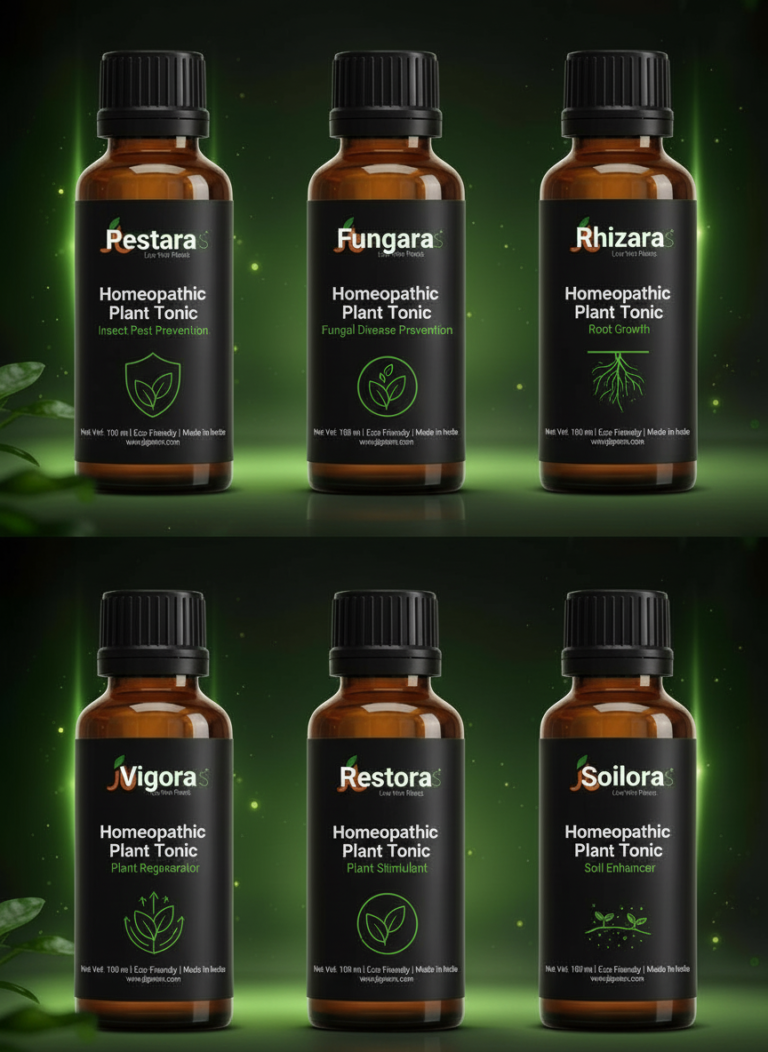
JB Greens Recommendation: Boost foliage depth and root vigor with JB Greens Plant Tonics, crafted to deliver mild, bioavailable nutrition safe for sensitive terrarium plants and microfauna.
-
-
Repotting: Repot every 1 to 2 years (or when the substrate compacts and breaks down). Handle with extra care during repotting and shipping—its delicate, fine twigs are naturally brittle and can snap easily, though the plant bounces back rapidly once settled.
Uses in Terrarium & Paludarium Setups
-
Closed & Semi-Closed Terrariums: An extraordinary midground focal plant or architectural accent. Because it stays compact and upright, it adds miniature forest-canopy structure without overtaking small glass vessels.
-
Paludariums & Ripariums: Thrives in the moist terrestrial or emergent land zones well above the waterline (do not submerge). The constant evaporation from the water feature provides the exact humidity it craves.
-
Bioactive Vivariums: Adds rich dark texture alongside driftwood, lava rock, and moss walls, creating stunning visual contrast against bright green mosses, miniature ferns, Fittonia, Begonia, and jewel orchids.




Reviews
There are no reviews yet.