Category: Palms
Explore palms and check each listing for mature growth and care requirements.
Showing all 6 results
-
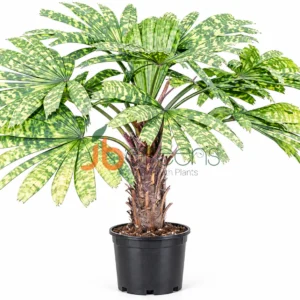
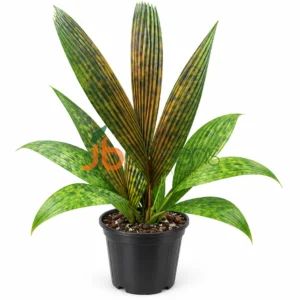
Licuala sp. ‘Mapu’, also referred to as Licuala mattanensis var. paucisecta or simply ‘Mapu’, is a highly distinctive and rare fan palm native to the rainforests of Kalimantan (Borneo), Indonesia. This palm is known for its beautiful, tesselated foliage featuring green leaves with greenish-yellow blotches distributed in a rectangular, radial pattern. Mature plants develop slender …
Add to cart -
Calyptrocalyx palms range from small to large species, with trunks that can be slender and unbranched or clustering. Trunks are conspicuously ringed by leaf scars. Leaves may be pinnate, bifid (split in two), or undivided, often brightly colored when young (purple, red, or orange new foliage) and maturing to green. The fruit is usually orange …
Add to cart -
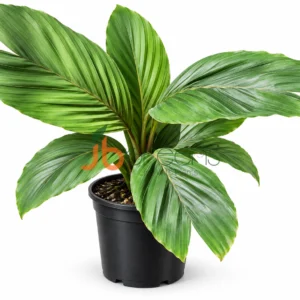
Pinanga densiflora is a monoecious palm species known for its attractive, dense foliage and suckering growth habit. It’s considered one of the more handsome species in the Pinanga genus, largely due to its foliage, which can become a deep uniform green especially if heavily fed. Juvenile plants often show mottled leaves—darker areas surrounded by lighter …
Add to cart -
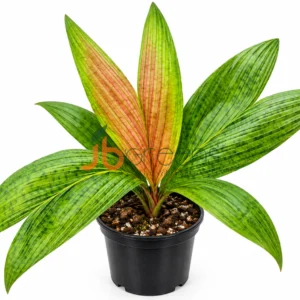
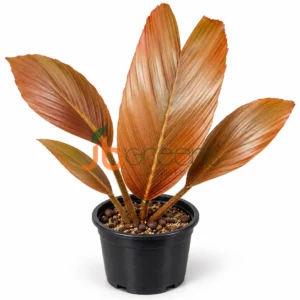
Pinanga sessilifolia is a small, solitary palm species. It has pinnate leaves with broad segments. The new leaves have a reddish tint. It is native to tropical regions of Malaysia and Indonesia. It is known as a slow-growing species. Caring Prefers a warm and sheltered environment. Moist conditions are favorable for its growth. It thrives …
Add to cart -
Pinanga subterranea is a small, solitary, acaulescent palm—meaning it has little to no visible above-ground stem. The stem is short, about 6 cm long and 1.2–1.8 cm in diameter, buried underground. Leaves number 4–6 in the crown, with leaf sheaths that are pale to deep yellow or green and covered with reddish-brown scales. Leaves are …
Add to cart -
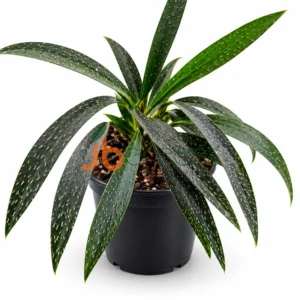
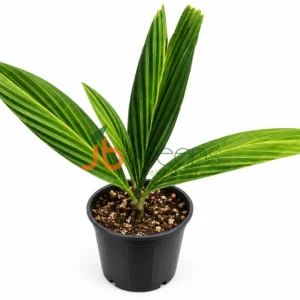
Pinanga tomentella is a dwarf palm species. It is mildly clustering, meaning it forms small clumps or clusters. The typical height is about 1 meter (3 feet). It is native to the rainforests of the island of Borneo. It grows primarily in the wet tropical biome. The palm belongs to the genus Pinanga, which includes …
Add to cart
Products
-
 Asparagus plumosus
Original price was: ₹1,550.00.₹1,200.00Current price is: ₹1,200.00.
Asparagus plumosus
Original price was: ₹1,550.00.₹1,200.00Current price is: ₹1,200.00.
-
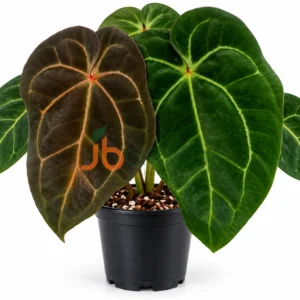 Anthurium BVIT* Docblock
Original price was: ₹9,600.00.₹8,650.00Current price is: ₹8,650.00.
Anthurium BVIT* Docblock
Original price was: ₹9,600.00.₹8,650.00Current price is: ₹8,650.00.
-
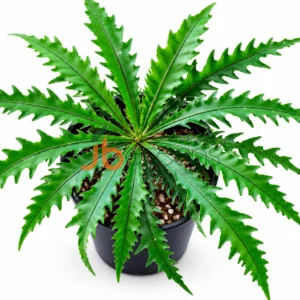 Labisia Star Light
Original price was: ₹2,200.00.₹1,650.00Current price is: ₹1,650.00.
Labisia Star Light
Original price was: ₹2,200.00.₹1,650.00Current price is: ₹1,650.00.
-
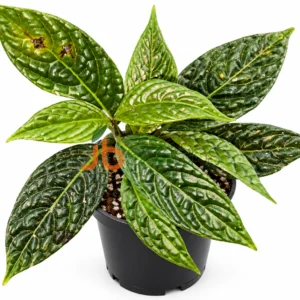 Ardisia Odontiphollia
Original price was: ₹2,200.00.₹1,650.00Current price is: ₹1,650.00.
Ardisia Odontiphollia
Original price was: ₹2,200.00.₹1,650.00Current price is: ₹1,650.00.
-
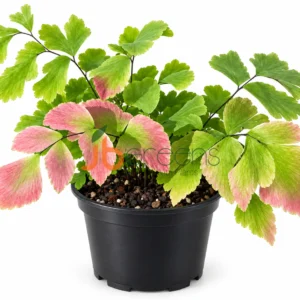 Microphyllum Verigated
Original price was: ₹1,600.00.₹1,400.00Current price is: ₹1,400.00.
Microphyllum Verigated
Original price was: ₹1,600.00.₹1,400.00Current price is: ₹1,400.00.