
-
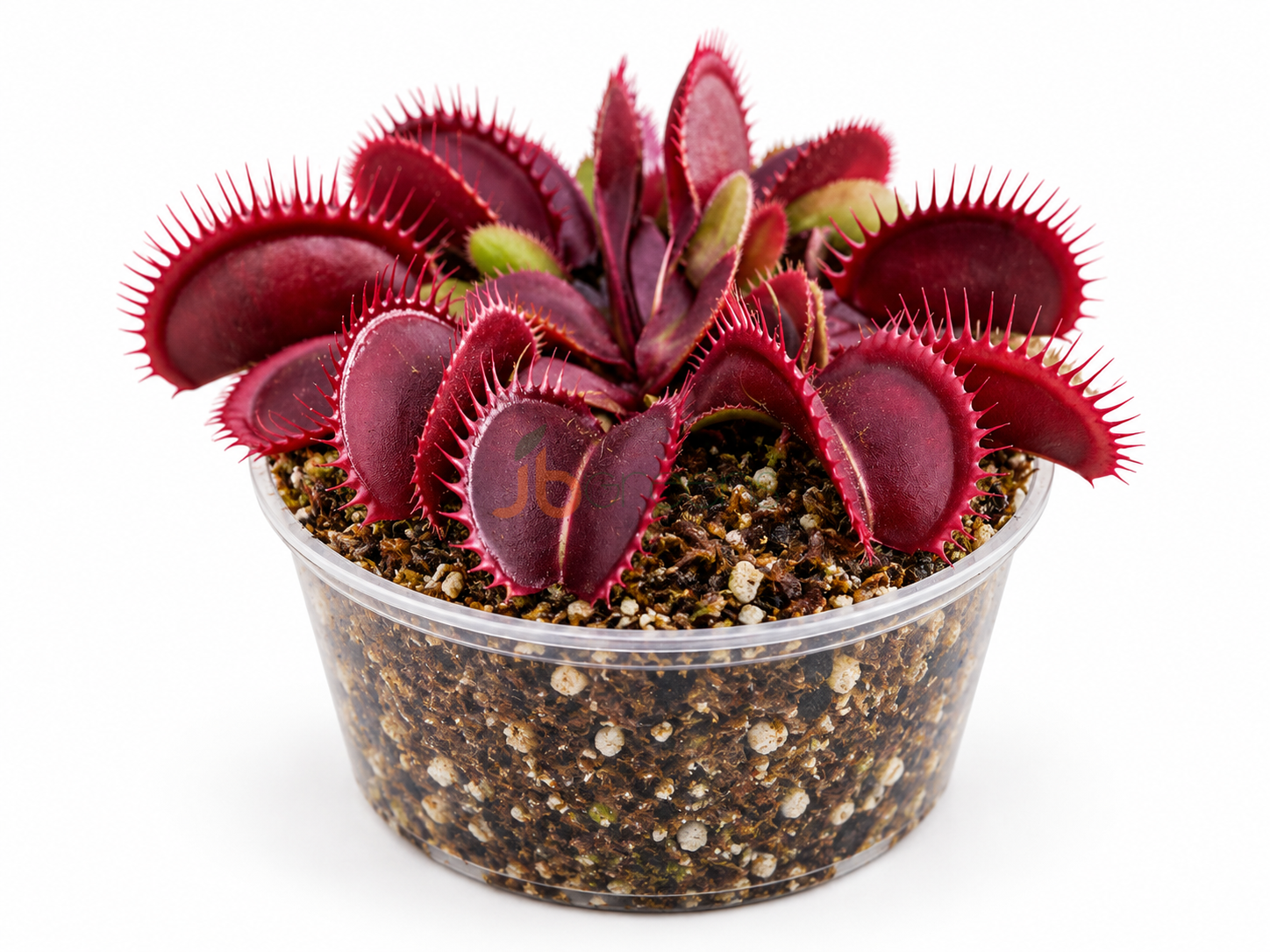
Deep Burgundy-Red Foliage: From the wide petioles to the outer edges of the snap-traps, the entire plant glows with a rich, dark maroon to ruby-red saturation when given adequate light.
-
Contrasting Interior Cilia: The trigger hairs and marginal teeth provide a sharp visual contrast, while the inner digestive glands secrete glistening nectar to attract unsuspecting prey.
-
Snap-Trap Mechanism: Features rapid mechanoreceptive trigger hairs; if an insect brushes two hairs within roughly 20 seconds, the trap snaps shut in a fraction of a second.
History, Discovery & Naming
While the species Dionaea muscipula was first formally described to science in the late 18th century (famously dubbed “one of the wonders of the vegetable kingdom” by Thomas Jefferson), the ‘Red Dragon’ (‘Akai Ryu’) cultivar was officially bred, selected, and introduced by tissue-culture pioneer Ron Gagliardo of Agristarts Inc. in Apopka, Florida, during the early 1990s. The Japanese cultivar name Akai Ryu was subsequently coined to honor its dramatic, fiery appearance.
Detailed Care & Cultivation Guide
1. Lighting Requirements
-
Full Sun is Essential: To achieve and maintain its signature dark red pigmentation, your ‘Red Dragon’ needs at least 6 hours of direct, unobstructed sunlight daily.
-
Indoor Growing: If grown indoors, place it directly on a south-facing windowsill or under high-output LED grow lights (at least 3000–5000 lumens). Insufficient light will cause the new growth to revert to a pale greenish-red.
2. Watering (The Tray Method)
-
Zero Minerals Tolerance: Never use tap water, mineral water, or softened water, as the dissolved salts will quickly burn and kill the roots. Use only distilled water, reverse osmosis (RO) water, or collected rainwater with a total dissolved solids (TDS) reading under 50 ppm.
-
Constant Moisture: Keep the potting medium consistently wet. The easiest and safest method is the tray method: set your plant’s pot in a shallow tray containing 1–2 inches of pure water at all times.
3. Potting Media & Repotting
-
The Golden Rule: Never use standard potting soil, garden soil, or compost—these contain rich fertilizers that will kill carnivorous plants instantly.
-
The JB Greens Standard: Pot your ‘Red Dragon’ using JB Greens Specialized Carnivorous Potting Media—a sterile, nutrient-free blend of 50% high-grade unfertilized sphagnum peat moss and 50% coarse horticultural perlite or silica sand for optimal aeration and moisture retention.
-
Repotting: Repot every 1–2 years in early spring just as it emerges from dormancy, using fresh JB Greens media.
4. Humidity & Nutrient Requirements
-
Humidity: Thrives in ambient household humidity (40%–60%) but excels in higher-humidity terrarium and greenhouse setups.
-
Nutrients: Do not fertilize the soil. Carnivorous plants evolved trap mechanisms precisely because their native bogs lack nitrogen and phosphorus. Feeding should come strictly from live or freshly killed insects (like fruit flies or small ants) caught naturally or fed sparingly once every few weeks. Boost overall vitality safely using specially formulated JB Greens Plant Tonics designed to support root recovery and stress management without introducing harmful mineral salts.
Suitability for Terrariums & Paludariums
-
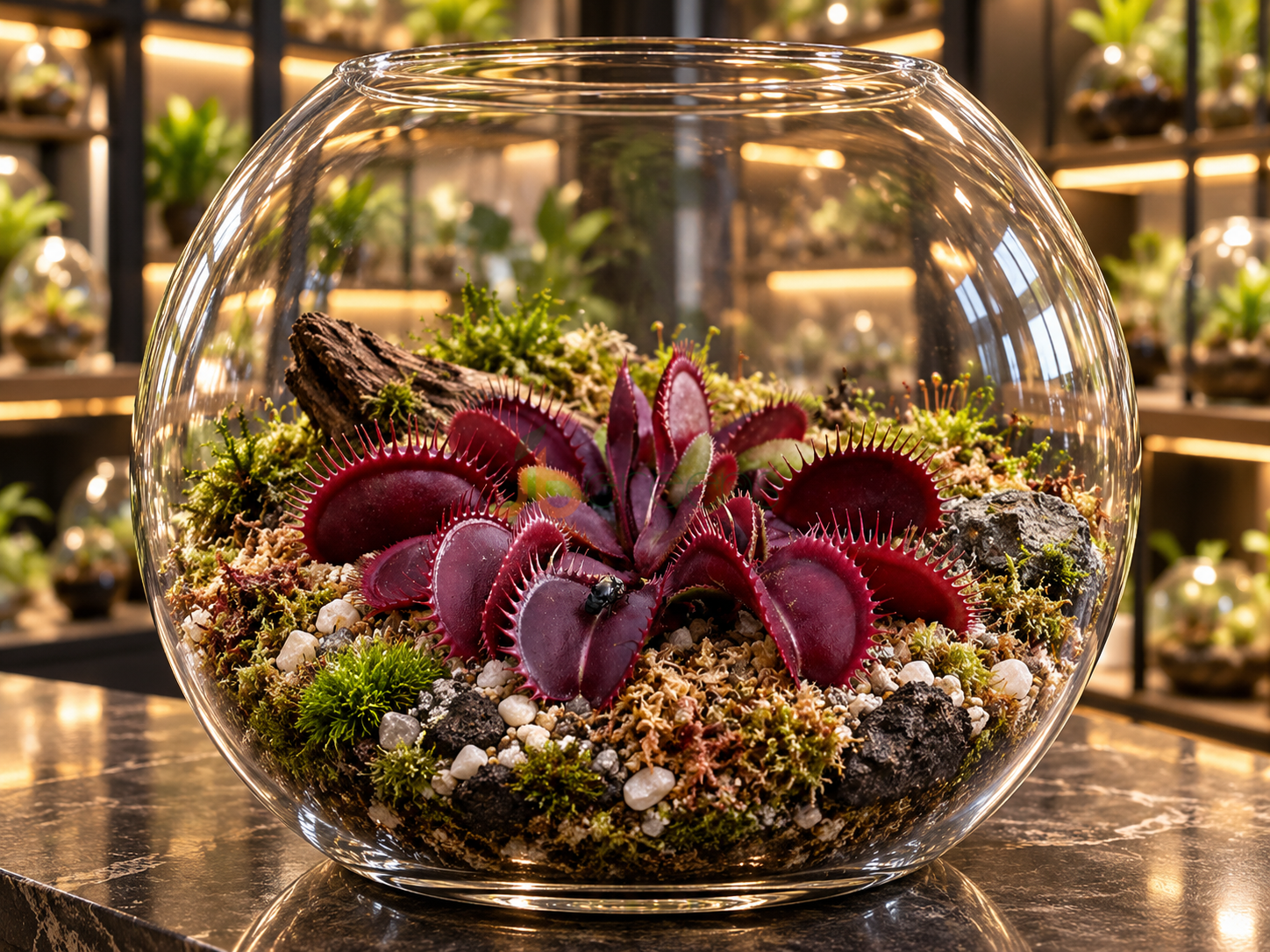
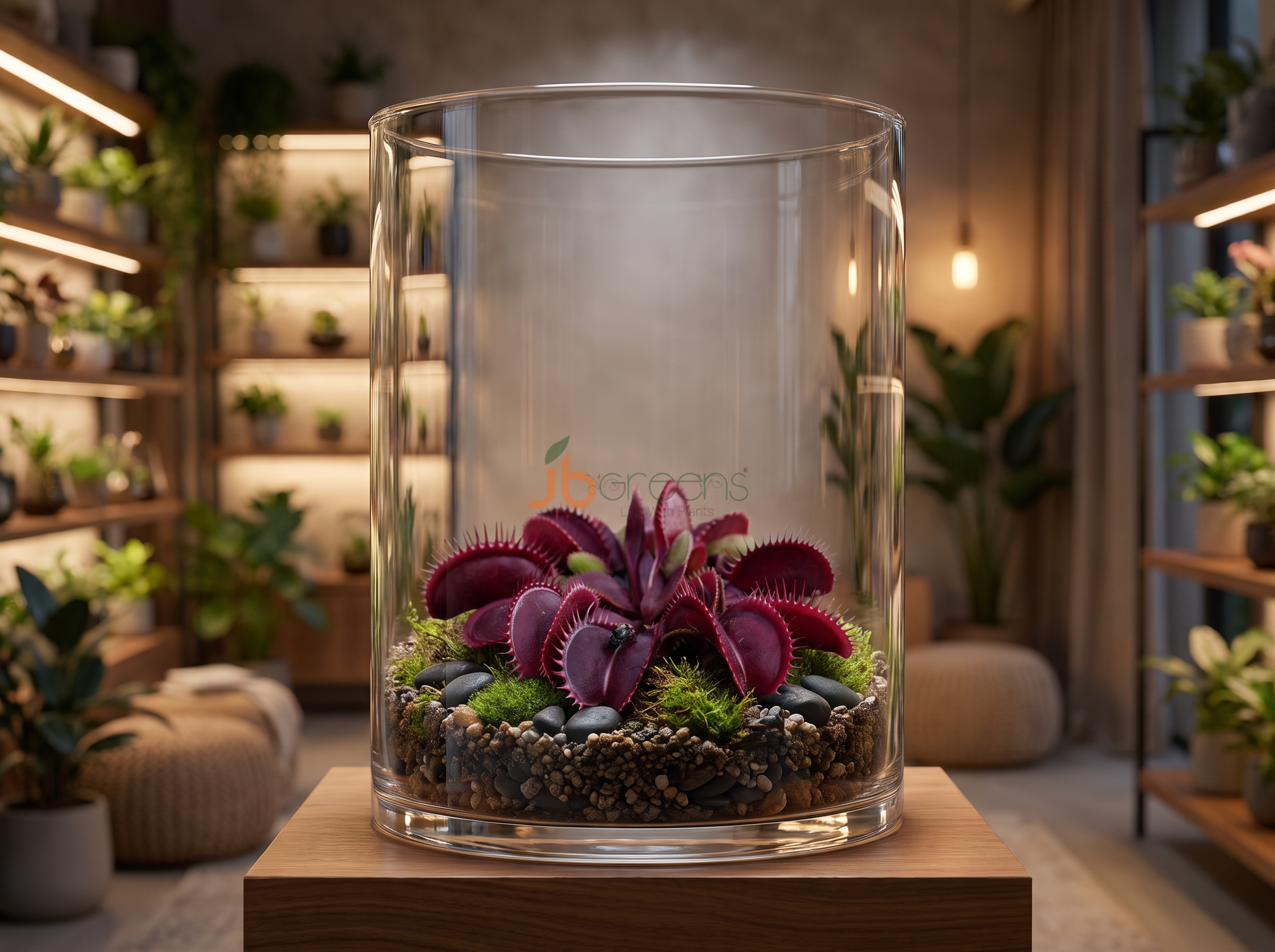
Terrarium Use: ‘Red Dragon’ makes an incredible addition to open, high-light tropical or temperate terrariums, provided they feature strong ventilation and high-intensity lighting.
-
Paludarium Use: They can flourish brilliantly along the damp, mossy margins of a paludarium waterfall or simulated bog bank, provided their root systems sit in nutrient-free media with constant access to pure water without becoming completely waterlogged or submerged.
| Plant group | Carnivorous plants |
|---|---|
| Genus | Dionaea |
| Botanical family | Droseraceae |
| Growing environment | Indoor growing |
| Light | Full sun |
| Humidity | High humidity |
Only logged in customers who have purchased this product may leave a review.
Related products
-
ABOUT THE PLANT: Indonesia endemic plant from Papua The photo is representative Plant in the good condition and healthy 4-6 leaves It is sold per plant Ardisia is a genus of flowering plants in the family Primulaceae. It was in the former Myrsinaceae family now recognised as the myrsine sub-family Myrsinoideae. They are distributed in …
Read more -
ABOUT THE PLANT: Indonesia endemic plant The photo is representative Plant in the good condition and healthy It is sold per plant Amorphophallus is a large genus of some 200 tropical and subtropical tuberous herbaceous plants from the Arum family (Araceae), native to Asia, Africa, Australia and various oceanic islands. None of them are found …
Add to cart -
ABOUT THE PLANT: Indonesia endemic plant The photo is representative Plant in the good condition and healthy It has 6-7 leaves It is sold per plant Ardisia is a genus of flowering plants in the family Primulaceae. It was in the former Myrsinaceae family now recognised as the myrsine sub-family Myrsinoideae. They are distributed in the …
Add to cart -
Here are some general guidelines for growing Scindapsus: Light requirements: Scindapsus plants thrive in bright, indirect light. Temperature and humidity: Scindapsus plants prefer temperatures between 65°F and 85°F (18°C to 29°C). Watering: Water your Scindapsus when the top inch of the soil feels dry. Soil and potting: Use a well-draining potting mix that retains some …
Read more

Products
-
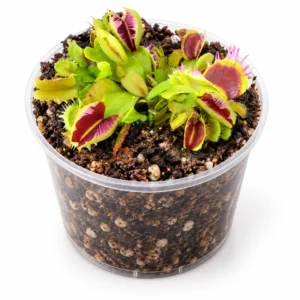 Dionaea muscipula 'Fused Tooth'
Original price was: ₹2,100.00.₹1,800.00Current price is: ₹1,800.00.
-
 Ceratostylis Javanica
Original price was: ₹1,600.00.₹1,400.00Current price is: ₹1,400.00.
-
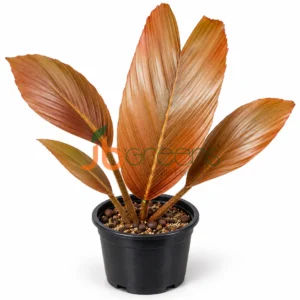 Pinanga Ridleyana
Original price was: ₹3,900.00.₹3,250.00Current price is: ₹3,250.00.
-
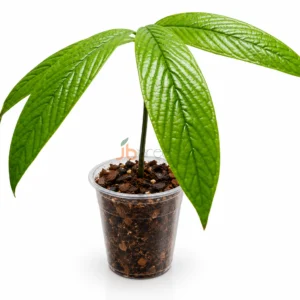 Fissistigma Sp
Original price was: ₹4,100.00.₹3,800.00Current price is: ₹3,800.00.
-
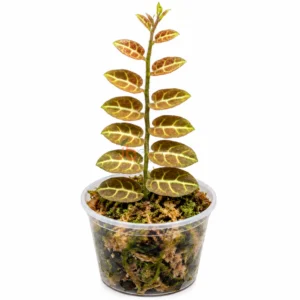 Solanum Evolvulifolium
Original price was: ₹1,800.00.₹1,300.00Current price is: ₹1,300.00.


Reviews
There are no reviews yet.