

Hypnum Cupressiforme Mosses are tiny, non‑flowering, non‑vascular plants that grow in dense green mats or cushions, often on soil, rocks, tree bark, or walls. They lack true roots, stems, and leaves as seen in higher plants; instead they absorb water and nutrients directly through their surface cells and anchor with hair‑like rhizoids.
Hypnum Cupressiforme mosses are part of the bryophytes, an ancient group of plants that reproduce by spores and usually form low, carpet‑like colonies rather than upright foliage. Many species look like soft, velvety cushions or tiny rosettes, often bright green but sometimes reddish or silvery depending on moisture and light.
They stay very small (a few millimeters to a couple of centimeters tall) and are extremely slow‑growing, making them ideal as ground cover or “living carpet” in shaded or moist micro‑habitats.
Growing conditions
- Light: Most mosses prefer indirect or filtered light, such as under trees, on a shaded wall, or in a bright but shaded corner indoors. Full, hot sun usually dries them out quickly, though some species tolerate a few hours of soft morning sun if kept moist.
- Moisture and humidity: They need constantly moist or at least frequently damp conditions and high humidity (often above 60–70%). In terrariums or vivariums they thrive when misted regularly and the substrate never fully dries.
- Temperature: Many common mosses do well in moderate temperatures roughly 15–25 °C (55–75 °F), surviving mild cold or warmth but suffering in prolonged heat or frost. Desert‑adapted mosses are more tolerant of extremes.
- Substrate and pH: They grow on poor, compact, slightly acidic substrates (pH around 5.0–5.5), such as compacted soil, rocks, tree bark, or logs. They do not need rich soil; in fact, they compete poorly with dense grass or heavy fertilizers.
Care routine
- Watering: Keep the surface damp but not waterlogged. Light, frequent misting or a gentle shower a few times a week is usually enough; allow the top to almost dry before the next mist. Avoid long dry spells, especially during the first few weeks after transplanting.
- Air and cleanliness: Good air circulation helps prevent algae or mold, but avoid strong drafts that dry the moss too fast. Keep the area free of heavy leaf litter or dust that can smother the carpet.
- Fertilizer: Mosses need very little or no fertilizer; they absorb nutrients from the air and water. Over‑fertilizing encourages competing plants or algae and can burn the moss.
- Propagation: They spread vegetatively by tiny fragments; you can shear or break a patch and press it onto a moist, rough surface, then keep it humid until it reattaches.
Adaptability and resilience
Mosses are remarkably adaptable to difficult niches, colonizing rocky outcrops, bark, and cracks where vascular plants struggle. Many species can dry out, go dormant, and “come back to life” when re‑moistened, a trait called desiccation tolerance.
They tolerate a wide range of climates (from near‑arctic to semi‑arid regions), although each species has its own preferred light and moisture window; once acclimated, they need stable humidity and gentle light more than rich soil or complex care.
| Plant group | Mosses & liverworts |
|---|---|
| Genus | Hypnum |
| Light | Partial sun |
Only logged in customers who have purchased this product may leave a review.
Related products
-
ABOUT THE PLANT: Common name: Acranthera Sp. Green Metalic Indonesia endemic plant The photo is representative Plant is healthy and in the good condition It is sold per plan
Read more -
ABOUT THE PLANT: Indonesia endemic plant The photo is representative Plant is healthy and in the good condition It is sold per plant
Read more -
ABOUT THE PLANT: Indonesia endemic plant The photo is representative Plant in the good condition and healthy It is sold per plant Amorphophallus is a large genus of some 200 tropical and subtropical tuberous herbaceous plants from the Arum family (Araceae), native to Asia, Africa, Australia and various oceanic islands. None of them are found …
Add to cart -
ABOUT THE PLANT: Indonesia endemic plant from Sumatera and Java Island The photo is representative Plant in the good condition and healthy It is sold per plant Cosmianthemum is a genus of flowering plants belonging to the family Acanthaceae. Scientific classification Kingdom: Plantae Clade: Tracheophytes Clade: Angiosperms Clade: Eudicots Clade: Asterids Order: Lamiales Family: Acanthaceae …
Read more



Products
-
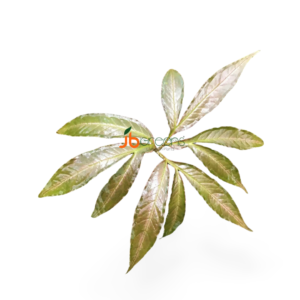
 Asparagus plumosus
Original price was: ₹1,550.00.₹1,200.00Current price is: ₹1,200.00.
Asparagus plumosus
Original price was: ₹1,550.00.₹1,200.00Current price is: ₹1,200.00.
-
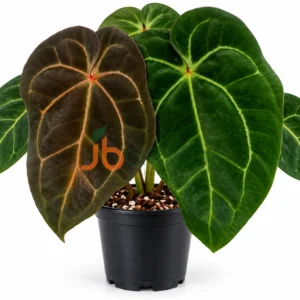 Anthurium BVIT* Docblock
Original price was: ₹9,600.00.₹8,650.00Current price is: ₹8,650.00.
Anthurium BVIT* Docblock
Original price was: ₹9,600.00.₹8,650.00Current price is: ₹8,650.00.
-
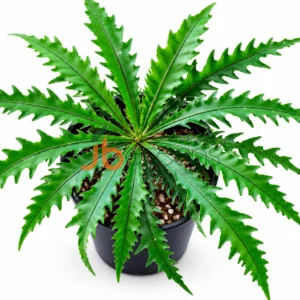 Labisia Star Light
Original price was: ₹2,200.00.₹1,650.00Current price is: ₹1,650.00.
Labisia Star Light
Original price was: ₹2,200.00.₹1,650.00Current price is: ₹1,650.00.
-
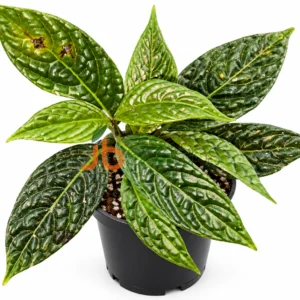 Ardisia Odontiphollia
Original price was: ₹2,200.00.₹1,650.00Current price is: ₹1,650.00.
Ardisia Odontiphollia
Original price was: ₹2,200.00.₹1,650.00Current price is: ₹1,650.00.
-
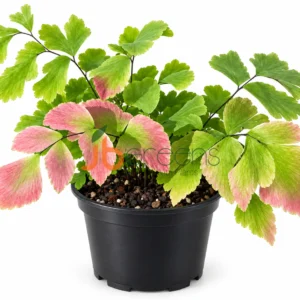 Microphyllum Verigated
Original price was: ₹1,600.00.₹1,400.00Current price is: ₹1,400.00.
Microphyllum Verigated
Original price was: ₹1,600.00.₹1,400.00Current price is: ₹1,400.00.



Reviews
There are no reviews yet.