
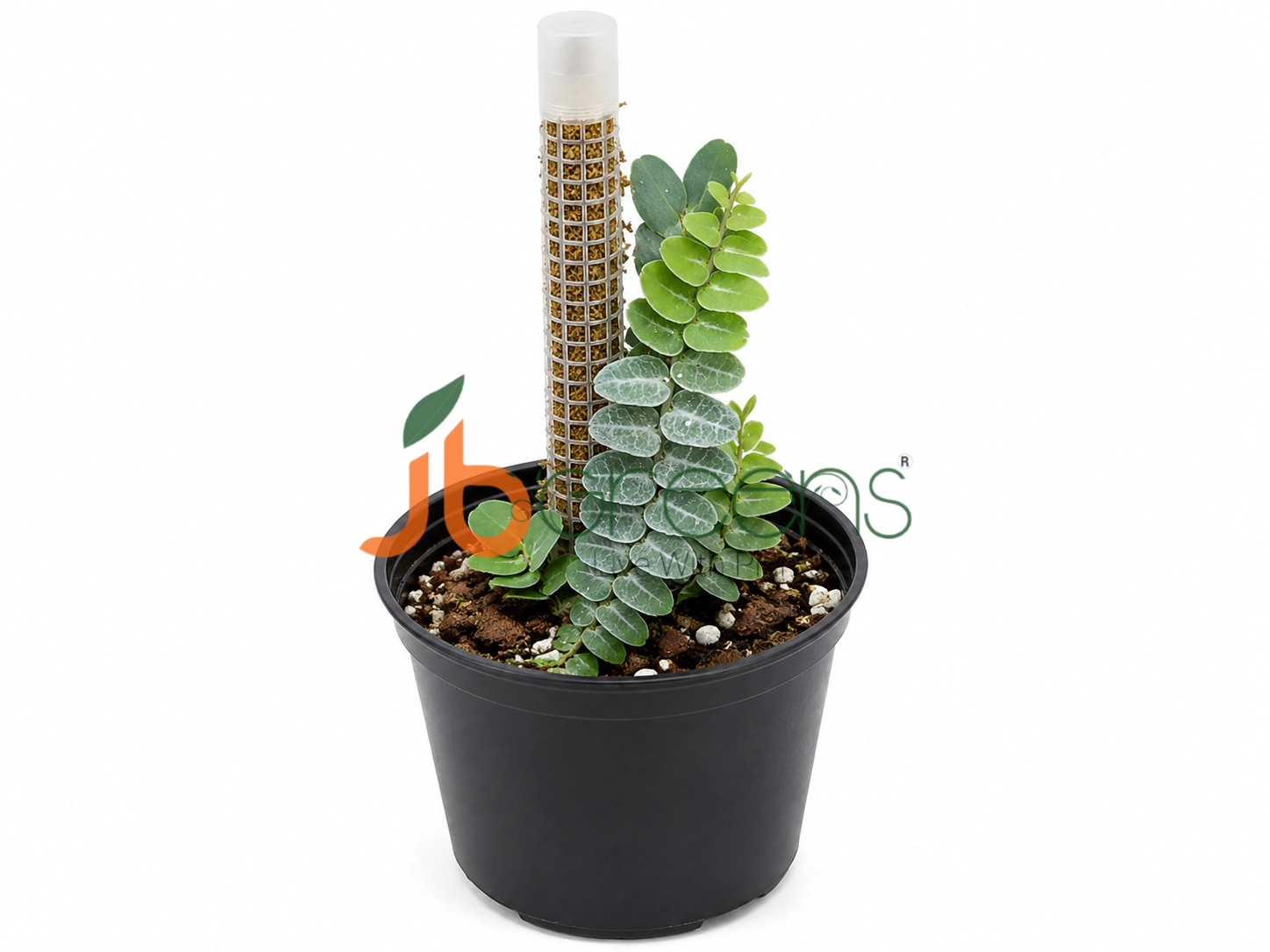
Marcgravia umbellata, commonly known as a shingling vine, is a tropical climbing plant native to the rainforests of Central and South America and the Caribbean. It is primarily recognized for its unique, glossy, and fleshy leaves that grow in a dense, shingling pattern along long stems as the plant climbs tree trunks or rocks in its natural habitat. As the plant matures, it develops lateral branches that produce umbelliform inflorescences featuring green or cream-colored flowers.
Growing Conditions
To replicate its natural environment, this species requires a warm, humid climate and should ideally be housed in a terrarium or a similar high-humidity enclosure where levels remain consistently above 70%. The plant thrives in medium to bright, indirect light, as direct sun can easily scorch its delicate foliage. A well-drained, organic-rich substrate, such as a specialized orchid or epiphytic mix, provides the necessary aeration and moisture retention. For rooting and initial establishment, placement on moist sphagnum moss in lower light conditions is often effective.
Care Requirements
-
Watering: Keep the substrate consistently moist but avoid waterlogging or allowing standing water to linger on the leaves, as this can lead to rot.
-
Temperature: Maintain temperatures in a warm range, ideally between 18°C and 28°C, while protecting the plant from cold drafts.
-
Fertilization: During the active growth phases in spring and summer, a balanced fertilizer applied at half-strength is sufficient to support development.
-
Support: Because it is a climbing vine, providing a vertical surface like a piece of wood or specialized board will encourage it to display its characteristic shingling growth habit.
Adaptability
Marcgravia umbellata is considered somewhat finicky, particularly regarding its humidity requirements, which makes it less suitable for typical open-air houseplant settings. While it can tolerate lower light levels, its coloration and leaf pattern are most vibrant under bright, indirect light. Young leaves may emerge with unique tints, such as pinkish hues, before transitioning to deep green as they mature. Its ability to shift its foliage and growth structure in response to light, known as phototropism, is a notable feature as it seeks to anchor itself to a support.
| Plant group | Other foliage & flowering plants |
|---|---|
| Genus | Marcgravia |
| Growing environment | Indoor growing |
| Growth habit | Climbing |
Only logged in customers who have purchased this product may leave a review.
Related products
-
Labisia is a genus of small woody and leafy plants with creeping stems and is mainly found in Labisia species are small shrubs with upward pointing leaves. They root from stem and leaf cuttings. This plant has been cultivated in our nursery since 2018. The plants sent have healthy roots, stems and leaves. How to …
Add to cart -
ABOUT THE PLANT: Aglaonema are rhizomatous evergreen perennials with short stems bearing long-stalked, often attractively variegated leaves and rather insignificant, greenish or cream flowering spathes. The photo is representative Plant is healthy and in the good condition It is sold per plant
Read more -
Here are some general guidelines for growing Scindapsus: Light requirements: Scindapsus plants thrive in bright, indirect light. Temperature and humidity: Scindapsus plants prefer temperatures between 65°F and 85°F (18°C to 29°C). Watering: Water your Scindapsus when the top inch of the soil feels dry. Soil and potting: Use a well-draining potting mix that retains some …
Read more -
ABOUT THE PLANT: Indonesia aquatic plant The photo is representative Plant is healthy and in the good condition It is sold per plant
Read more


Products
-
 Asparagus plumosus
Original price was: ₹1,550.00.₹1,200.00Current price is: ₹1,200.00.
Asparagus plumosus
Original price was: ₹1,550.00.₹1,200.00Current price is: ₹1,200.00.
-
 Anthurium BVIT* Docblock
Original price was: ₹9,600.00.₹8,650.00Current price is: ₹8,650.00.
Anthurium BVIT* Docblock
Original price was: ₹9,600.00.₹8,650.00Current price is: ₹8,650.00.
-
 Labisia Star Light
Original price was: ₹2,200.00.₹1,650.00Current price is: ₹1,650.00.
Labisia Star Light
Original price was: ₹2,200.00.₹1,650.00Current price is: ₹1,650.00.
-
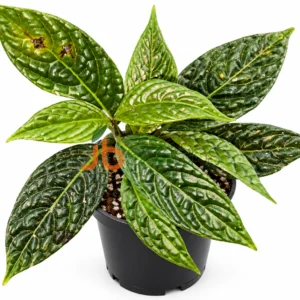 Ardisia Odontiphollia
Original price was: ₹2,200.00.₹1,650.00Current price is: ₹1,650.00.
Ardisia Odontiphollia
Original price was: ₹2,200.00.₹1,650.00Current price is: ₹1,650.00.
-
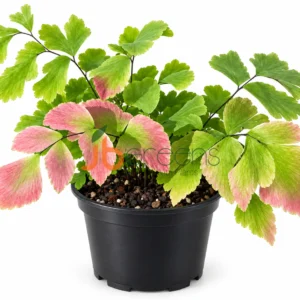 Microphyllum Verigated
Original price was: ₹1,600.00.₹1,400.00Current price is: ₹1,400.00.
Microphyllum Verigated
Original price was: ₹1,600.00.₹1,400.00Current price is: ₹1,400.00.

Reviews
There are no reviews yet.