
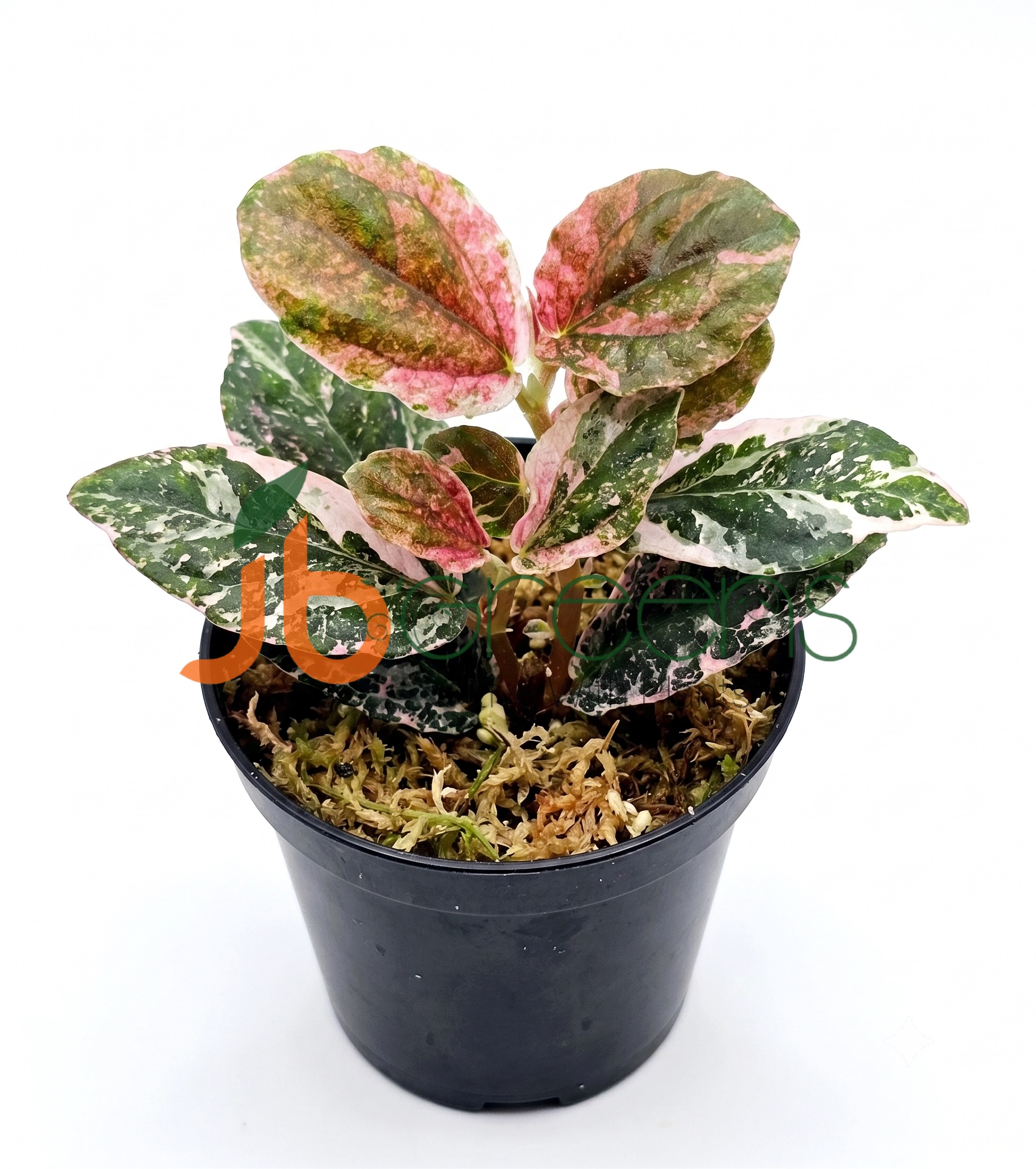
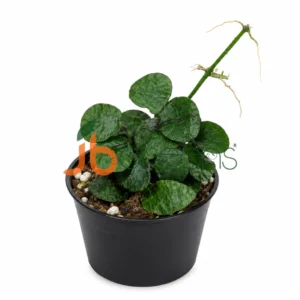
“Pellonia Pink Variegated” (often sold as Pellionia repens ‘Variegata’ or “Variegated Watermelon Begonia”) is a small, trailing houseplant in the nettle family (Urticaceae), prized for its soft, fleshy leaves painted in shades of green, cream, and soft pink. It is closely related to the common Watermelon Begonia but selected for its pink‑tinted variegation and more colorful, cascading foliage.[1][2][3][4]
Plant description
- Growth habit: Creeping, low‑growing, and trailing; stems run along the soil or over the edge of pots, forming a dense, carpet‑like mat.
- Stems and leaves: Stems are fleshy and greenish‑pink; leaves are oblong to oval, slightly wavy‑edged, with a soft, almost succulent texture.
- Variegation: Leaves show a mix of green, cream, and variable pink washes, often along the margins or in irregular streaks; the lower surface can have a reddish‑purple or pinkish tint.
- Size: Typically stays low (3–6 inches tall) but can trail 1–2 feet or more from the pot, making it ideal for hanging baskets or shelves.
Light and position
- Light preference: Bright, indirect light all year. Direct sun easily scorches the thin, variegated leaves, while too little light causes leggy growth and loss of pink coloration.
- Indoor placement: Near an east‑facing window, or a few feet back from a south/west window with a sheer curtain. A north window can work if the room is otherwise bright.
Watering and humidity
- Watering: Keep the soil “moist but well‑drained” during active growth (spring–summer); let the top 1–2 cm dry slightly between waterings. In autumn–winter, water a bit less often, but never let the soil dry out completely, as the plant dislikes drought.[5][6][7]
- Humidity: Likes higher humidity (around 50–70%) and responds well to occasional misting or a humidity tray. Very dry air can cause leaf edges to brown and variegation to fade.[8][4][5]
Temperature and adaptability
- Ideal range: Comfortable between about 18–24°C (65–75°F) indoors, with an acceptable range of roughly 16–27°C (60–80°F
- Adaptability: Fairly adaptable as a houseplant but sensitive to cold drafts, sudden temperature drops, and dry, overheated air (e.g., near heaters or AC vents). Not winter‑hardy outdoors in temperate zones; in practice it is treated as a tender perennial or houseplant in most climates.
Soil and potting
- Soil mix: Use a well‑draining, rich, peat‑based or houseplant mix. A simple blend is: 2 parts potting soil + 1 part perlite + 1 part coarse sand or orchid bark to ensure drainage and aeration.[5][6][4]
- Potting: Best in shallow but slightly wider pots or baskets, with good drainage holes. For hanging baskets, lining with moss before adding soil helps retain moisture without waterlogging.
- Repotting: Repot every 1–2 years in spring when the plant starts to crowd the pot; this also gives a chance to refresh the soil and trim any leggy stems.
Feeding and pruning
- Fertilizing: Feed every 4 weeks in spring and summer with a balanced, water‑soluble fertilizer at half strength; hold off or reduce feeding in autumn and winter. Over‑fertilizing can burn the tender leaves and reduce variegation.
- Pruning and shaping: Pinch or lightly trim the stems regularly to encourage bushy, compact growth and prevent long, bare runners.
- Propagation: Easily propagated in water or soil by 4‑6 inch stem cuttings with a few leaves; roots usually form within 2–4 weeks.
Common problems and tips
- Leaf issues: Brown or crispy edges usually indicate low humidity or inconsistent watering; yellowing leaves can signal overwatering or poor drainage.
- Variegation loss: If the pink/cream color fades, check that the plant is getting enough bright, indirect light but not direct sun.
- Pests: Occasionally attracts spider mites or aphids in dry conditions; washing foliage and wiping leaves with a damp cloth can help prevent infestations.
If you tell your region (e.g., Bengaluru indoors vs. a balcony), I can tailor the care tips more precisely for your exact growing environment.
| Plant group | Other foliage & flowering plants |
|---|---|
| Genus | Pellonia |
| Growing environment | Indoor growing |
| Light | Bright indirect light |
| Humidity | High humidity |
| Growth habit | Creeping |
Only logged in customers who have purchased this product may leave a review.
Related products
-
ABOUT THE PLANT: Common name: Acranthera Sp. Kapuas Hulu Indonesia endemic plant The photo is representative Plant is healthy and in the good condition It has 2-3 leaves It is sold per plant
Read more -
ABOUT THE PLANT : Indonesia endemic plant The photo is representative Plant is healthy and in the good condition It is sold per plant Aglaonema are rhizomatous evergreen perennials with short stems bearing long-stalked, often attractively variegated leaves and rather insignificant, greenish or cream flowering spathes. (Source : Wikipedia) Scientific classification Kingdom: Plantae Clade: Tracheophytes …
Read more -
ABOUT THE PLANT: Indonesia aquatic plant The photo is representative Plant is healthy and in the good condition It is sold per plant
Read more


Products
-
 Asparagus plumosus
Original price was: $21.44.$16.60Current price is: $16.60.
Asparagus plumosus
Original price was: $21.44.$16.60Current price is: $16.60.
-
 Anthurium BVIT* Docblock
Original price was: $132.77.$119.63Current price is: $119.63.
Anthurium BVIT* Docblock
Original price was: $132.77.$119.63Current price is: $119.63.
-
 Labisia Star Light
Original price was: $30.43.$22.82Current price is: $22.82.
Labisia Star Light
Original price was: $30.43.$22.82Current price is: $22.82.
-
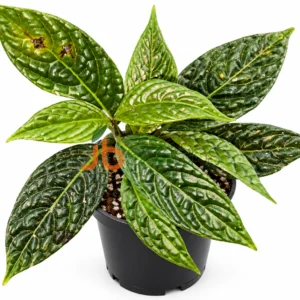 Ardisia Odontiphollia
Original price was: $30.43.$22.82Current price is: $22.82.
Ardisia Odontiphollia
Original price was: $30.43.$22.82Current price is: $22.82.
-
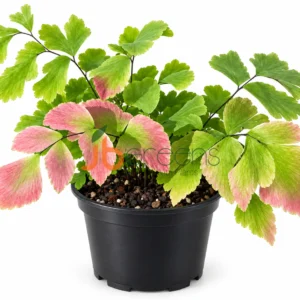 Microphyllum Verigated
Original price was: $22.13.$19.36Current price is: $19.36.
Microphyllum Verigated
Original price was: $22.13.$19.36Current price is: $19.36.

Reviews
There are no reviews yet.