
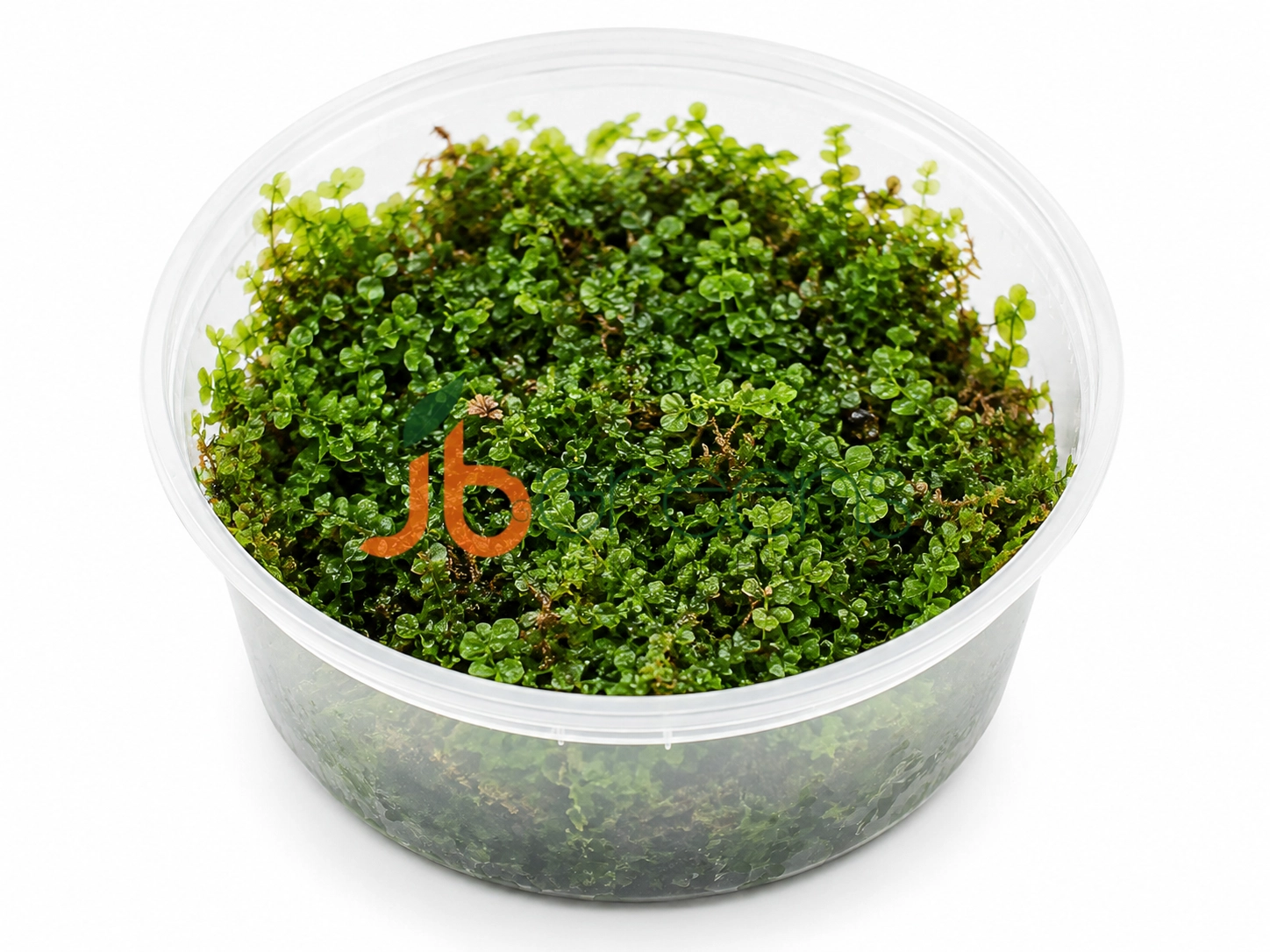
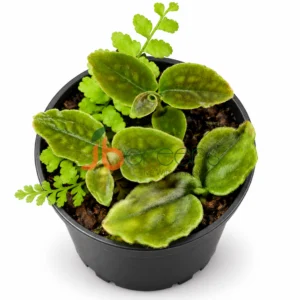
Plagiomnium sp. “Butterfly Moss” (often marketed as Plagiomnium sp. “Butterfly”) is a rare, moss‑like aquatic or semi‑aquatic bryophyte prized in aquascaping and damp terraria for its distinctive leaf shape and compact, attractive growth. It is usually treated as a Plagiomnium species, a genus in the family Mniaceae known for broad‑leafed mosses with glossy, slightly toothed leaves.
Description
-
Growth form: Butterfly Moss grows in tight, upright or slightly spreading tufts or mats, with short, densely packed stems giving a neat, carpet‑like appearance once established.
-
Leaves: The leaves are relatively large (for a moss), broadly rounded to kidney‑shaped, and arranged in a “butterfly‑wing” pattern along the stem, which gives the plant its common name.
-
Color and texture: The moss is medium to bright green, sometimes with a slightly glossy sheen when healthy, and feels soft and plush when well‑grown.
Care requirements
-
Water and moisture:
-
In aquariums, it grows fully submerged and must be kept in clean, well‑oxygenated water with regular partial water changes to prevent organic buildup.
-
In emersed (terrarium) culture, it needs constant high humidity (70–90%) and frequent misting with dechlorinated, RO, or distilled water to avoid mineral‑induced browning.
-
-
Light:
-
Aquatic: it prefers moderate to high light; too little light leads to leggy, sparse growth, while sufficient light promotes compact, bushy form and vibrant green color.
-
Emersed: grow under moderate to high indirect light or full‑spectrum LEDs; avoid prolonged direct midday sun, which can dry it out.
-
-
Nutrients and CO₂ (aquarium):
-
It can survive without CO₂ injection but grows much faster, denser, and more compact in a CO₂‑enriched setup.
-
Stable, low‑nitrate, low‑phosphate water and a clean substrate or base (e.g., aquasoil or nutrient‑rich pad) help prevent algae competing with the moss.
-
-
Trimming and propagation:
-
Clip stems with sharp scissors; the cut tips can be tied or glued onto hardscape (rocks, driftwood, mesh) where they will root via rhizoids and form new tufts.
-
Over time, loose clumps can be divided and re‑attached to spread the moss through the tank or terrarium.
-
Adaptability and tolerance
-
Water chemistry:
-
For aquarium culture, it tolerates a fairly wide range of hardness and a pH from about 6.0 to 8.0, as long as water quality is stable and not excessively polluted.
-
It can grow in soft to moderately hard water, but sudden swings in pH or hardness should be avoided.
-
-
Temperature range:
-
In aquariums, it does best between roughly 17–27°C; it is generally cool‑to‑warm‑temperate and prefers not to be exposed to prolonged high temperatures near the upper end of that band.
-
In emersed setups, growers commonly keep it around 15–24°C, with lower humidity when temperatures are higher.
-
-
Growth speed:
-
Butterfly Moss is relatively slow‑growing compared with common mosses like Java or Christmas moss, which makes it very stable and low‑maintenance once established.
-
Growing conditions (aquarium vs. emersed)
| Plant group | Mosses & liverworts |
|---|---|
| Genus | Plagiomnium |
| Light | Medium indirect light |
Only logged in customers who have purchased this product may leave a review.
Related products
-
ABOUT THE PLANT: The photo is representative Plant in the good condition and health It is sold per plant Abelmoschus is a botanical genus with 15 species that belongs to the Malvaceae family. (Source: Wikipedia). Scientific classification Kingdom: Plantae Clade: Tracheophytes Clade: Angiosperms Clade: Eudicots Clade: Rosids Order: Malvales Family: Malvaceae Subfamily: Malvoideae Tribe: Hibisceae Genus: …
Read more -
Here are some general guidelines for growing Scindapsus: Light requirements: Scindapsus plants thrive in bright, indirect light. Temperature and humidity: Scindapsus plants prefer temperatures between 65°F and 85°F (18°C to 29°C). Watering: Water your Scindapsus when the top inch of the soil feels dry. Soil and potting: Use a well-draining potting mix that retains some …
Read more -
ABOUT THE PLANT: Common name: Acranthera Sp. Red Metallic Indonesia endemic plant The photo is representative Plant is healthy and in the good condition It is sold per plant
Read more -
ABOUT THE PLANT: Indonesia endemic plant The photo is representative Plant is healthy and in the good condition It is sold per plant
Read more


Products
-
 Asparagus plumosus
Original price was: ₹1,550.00.₹1,200.00Current price is: ₹1,200.00.
Asparagus plumosus
Original price was: ₹1,550.00.₹1,200.00Current price is: ₹1,200.00.
-
 Anthurium BVIT* Docblock
Original price was: ₹9,600.00.₹8,650.00Current price is: ₹8,650.00.
Anthurium BVIT* Docblock
Original price was: ₹9,600.00.₹8,650.00Current price is: ₹8,650.00.
-
 Labisia Star Light
Original price was: ₹2,200.00.₹1,650.00Current price is: ₹1,650.00.
Labisia Star Light
Original price was: ₹2,200.00.₹1,650.00Current price is: ₹1,650.00.
-
 Ardisia Odontiphollia
Original price was: ₹2,200.00.₹1,650.00Current price is: ₹1,650.00.
Ardisia Odontiphollia
Original price was: ₹2,200.00.₹1,650.00Current price is: ₹1,650.00.
-
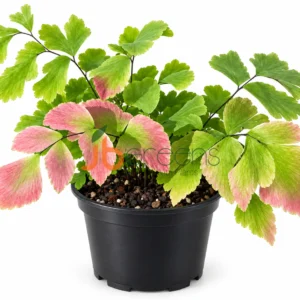 Microphyllum Verigated
Original price was: ₹1,600.00.₹1,400.00Current price is: ₹1,400.00.
Microphyllum Verigated
Original price was: ₹1,600.00.₹1,400.00Current price is: ₹1,400.00.
Reviews
There are no reviews yet.