

Porpax reticulata is a unique, small epiphytic orchid found mainly in the Western Ghats of India and neighboring regions, famed for its net-like pseudobulbs and solitary gramophone-shaped flowers.
Detailed Description
Porpax reticulata, known as the Gramophone Orchid, is a miniature epiphyte with discoid, green pseudobulbs covered in a reticulated sheath, usually measuring 0.5–2 cm in diameter. Its leaves are small, oblong-elliptic, and dark green, typically no longer than 1.5–5 cm; these may appear after the flowering period and often fall off early. The solitary flowers emerge from undeveloped pseudobulbs and are shaped like gramophone speakers—deep reddish-brown to brick-red, measuring up to 0.75 cm across. Sepals unite to form a tube with a triangular mouth, inside which small petals and a three-lobed lip reside, the latter being distinctly papillose with a tongue-like projection at the base. Flowering typically occurs from April to August.
Caring for Porpax Reticulata
This orchid is best cultivated as an epiphyte—mounted on bark or tree slabs in a well-ventilated spot, mimicking its natural habitat of tree trunks. It requires gentle but frequent misting to maintain humidity, yet the roots must never be overwatered or allowed to remain wet for extended periods. Minimal potting media, such as sphagnum moss or fine bark, can be used if mounting isn’t feasible. Partial shade is preferred, and direct midday sun should be avoided. This species benefits from moderate air circulation and appreciates the occasional orchid fertilizer at low strength during the growing season.
Adaptability
Porpax reticulata is highly adapted to humid, tropical forests, thriving as a hardy perennial in epiphytic conditions at elevations between 600–1200 meters. It prefers large, mature evergreen trees whose bark forms cork-like projections, especially those covered with moss, typically positioning itself about 2 meters above ground. While it favors the micro-habitats created by tree trunks—like those of Mangifera indica (mango tree)—it does not require a specific plant association to survive. It can tolerate seasonal dryness but must not be subjected to prolonged drought or completely dry air, making it relatively adaptable for culture in tropical and subtropical climates.
Growing Conditions
Light: Prefers partial shade to dappled sunlight, avoiding direct exposure.
Humidity: Thrives in high humidity (60–80%); regular misting is important if grown indoors.
Mounting: Typically grown mounted on bark or tree pieces without much media, mimicking epiphytic lifestyle.
Temperature: Ideal range is 18–26°C, with slight drops at night; not frost-tolerant.
Water: Needs frequent misting/moisture, but roots must dry between watering.
Fertilizer: Light orchid fertilizer during active growth (spring and summer).
Porpax reticulata is best grown in environments with well-drained substrates, moderate airflow, and consistently moist conditions that mirror its original forest habitat
Only logged in customers who have purchased this product may leave a review.
Related products
-
Close-up of Ceratochilus biglandulosus mounted on cork slab: one oversized crystalline white flower (green lip prominent) dwarfs tiny leathery leaves on pendulous stem, dew accents texture; soft diffused side-lighting evokes misty cloud forest, blurred mossy background, label “Ceratochilus biglandulosus (Endemic to Java)”
Add to cart -
Paphiopedilum hainanense is a captivating, sophisticated orchid that stands as a true gem for collectors and enthusiasts of rare tropical flora. Often celebrated for its stunning, intricately mottled foliage and elegant, slipper-shaped blooms, this species is a highlight for any sophisticated plant collection. Below is a detailed guide tailored for your website, jbgreens.com. Plant Profile: …
Add to cart -
Macro shot of blooming Bulbophyllum gibbosum in mossy slatted basket: cluster of swollen gibbous pseudobulbs with glossy leaves frames vibrant yellow-orange flower spikes (6-8 blooms showing keeled petals), water droplets add freshness; soft side-lighting highlights texture, blurred humid background, label “Bulbophyllum gibbosum” at bottom.
Add to cart -
Product Shot Description
Close-up of mature Bulbophyllum cornutum mounted on mossy cork slab: foreground shows bristly ovoid pseudobulbs with single glossy leaf and emerging horned flower (curved sepals/petals in yellowish-brown, hinged lip); soft natural light highlights texture, misty background evokes humid rainforest.
Add to cart


Products
-
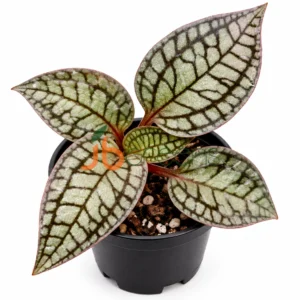 Jewel Cheirostylis montana
Original price was: $20.05.$15.21Current price is: $15.21.
Jewel Cheirostylis montana
Original price was: $20.05.$15.21Current price is: $15.21.
-
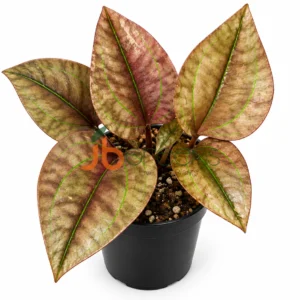 Orchid Nephelaphyllum Pulchrum
Original price was: $17.98.$13.14Current price is: $13.14.
Orchid Nephelaphyllum Pulchrum
Original price was: $17.98.$13.14Current price is: $13.14.
-
 Porpax Reticulata
Original price was: $21.44.$17.98Current price is: $17.98.
Porpax Reticulata
Original price was: $21.44.$17.98Current price is: $17.98.
-
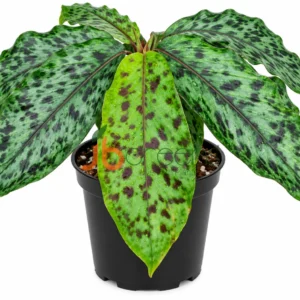 Etlingera brevilabrum
Original price was: $44.26.$38.72Current price is: $38.72.
Etlingera brevilabrum
Original price was: $44.26.$38.72Current price is: $38.72.
-
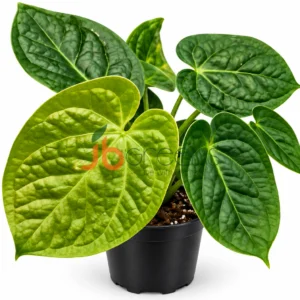 Anthurium Doraiki x Luxurians
Original price was: $62.24.$53.94Current price is: $53.94.
Anthurium Doraiki x Luxurians
Original price was: $62.24.$53.94Current price is: $53.94.


Reviews
There are no reviews yet.