
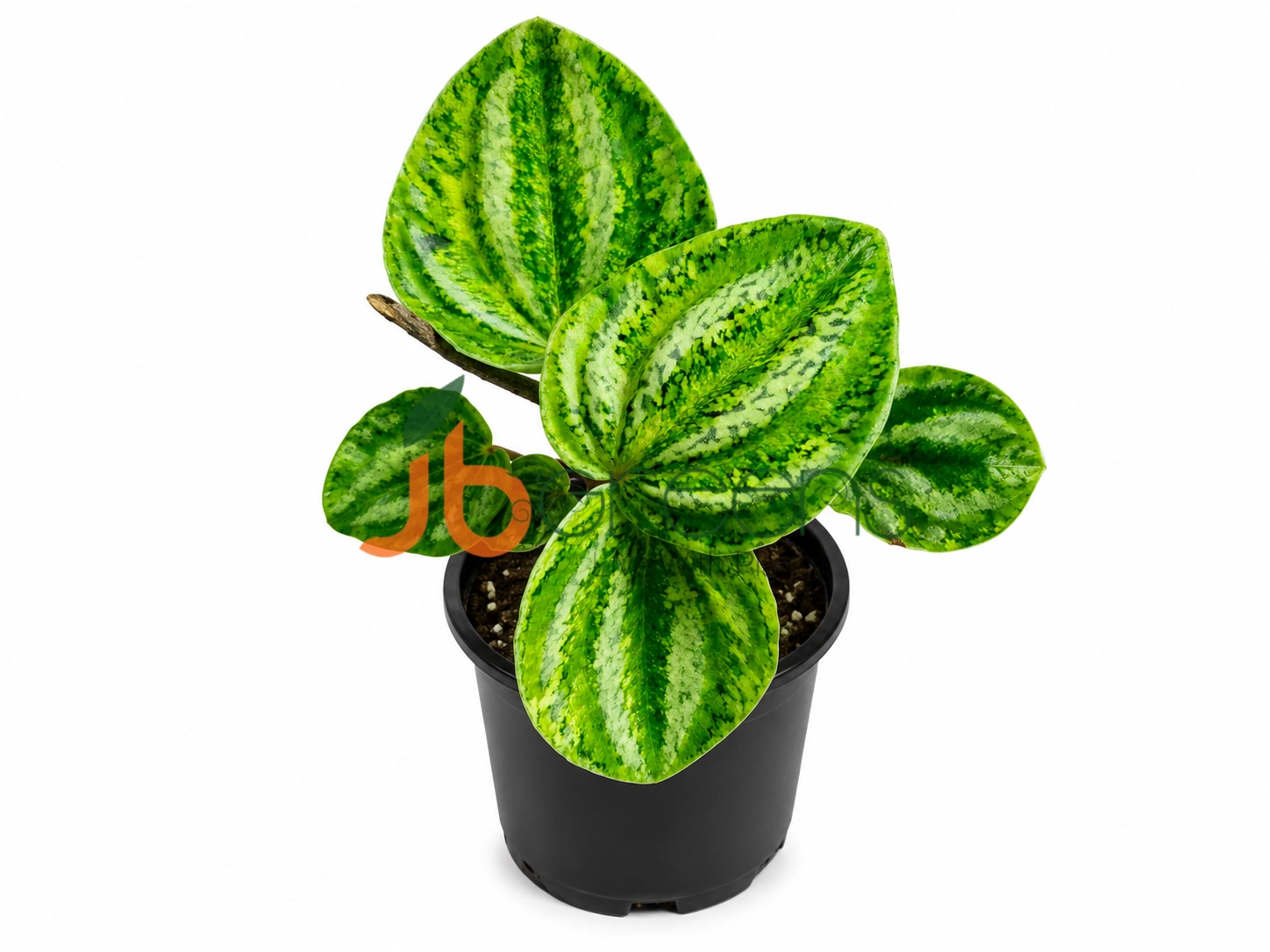
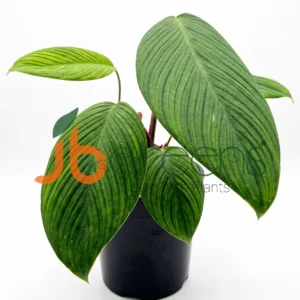
Watermelon Peperomia Yellow Variegated is a compact, bushy houseplant with striking foliage that looks like a tiny watermelon slice, while its yellow‑variegated form adds creamy‑yellow to light‑green tones along the leaf edges or patches. It is a semi‑succulent peperomia, so it stores some water in its leaves and stems and prefers slightly drier conditions once established.
Overall description and appearance
The plant usually grows to about 15–30 cm tall and wide, forming a small, rounded mound. Its leaves are broad, oval‑shaped, and slightly waxy, usually with a green base and silvery or yellowish stripes, depending on the specific variegation pattern. The stems are often reddish‑purple and relatively short, giving the plant a compact, tabletop‑friendly look.
Light and adaptability
Watermelon Peperomia Yellow Variegated thrives in bright, indirect light, such as near a window with a sheer curtain or a few feet away from a strong light source. Too much direct midday sun can bleach or burn the leaves, while very low light will cause slower growth, flatter leaves, and loss of variegation.
This species is quite adaptable to typical indoor environments, as long as it is not exposed to cold drafts, strong air conditioning, or heaters blowing directly on it. It can tolerate moderate light‑level changes but prefers a stable spot rather than frequent moves.
Temperature and humidity
Ideal daytime temperatures are roughly between 18–26 °C, with nighttime temperatures not dropping far below about 15–18 °C. It should be kept away from cold drafts and sudden temperature drops, since it is native to tropical forest understories and does not tolerate frost or cold snaps.
Average household humidity is usually enough, but slightly higher humidity (around 50–60%) helps keep the leaves plump and vibrant. Occasional misting, using a humidity tray, or grouping it with other plants can improve its comfort in very dry rooms.
Watering and soil
Water only when the top 1–2 cm of the mix feels dry; overwatering is the most common cause of leaf drop or rot. The plant has a succulent‑like habit, so it forgives slightly dry soil much better than soggy conditions.
Use a light, well‑draining potting mix such as a blend of regular potting soil with added perlite, coarse sand, or bark to improve aeration. A small pot with drainage holes is ideal, as the root system is compact and does not like sitting in water.
Fertilizing and growth habits
Feed with a diluted, balanced liquid fertilizer once every 4–6 weeks during the active growing season (spring and summer), reducing or stopping feeding in autumn and winter. Regular feeding is not strictly necessary, but light feeding can encourage denser growth and more pronounced coloration.
Growth is naturally slow to moderate; the plant rarely becomes leggy if kept in suitable light. If it starts stretching or leaves become smaller, it usually means the light level is too low or the plant is getting older stems that may benefit from pruning or replacement via cuttings.
Repotting and propagation
Repot only every 2–3 years, or when the plant appears very crowded or the soil breaks down. Choose a pot only slightly larger than the current one, as these plants prefer a snug root space.
Propagation can be done via stem or leaf cuttings:
- Take a stem section with at least one node and a couple of leaves, and root it in moist, well‑draining mix.
- Alternatively, remove a healthy leaf with its short stem, let the cut end callus slightly, then place it on or partially in the medium.
Keep the cuttings in bright, indirect light and slightly moist conditions until new growth appears; rooting can take a few weeks to a couple of months, depending on warmth and light.
| Plant group | Other foliage & flowering plants |
|---|---|
| Genus | Peperomia |
| Growing environment | Indoor growing |
| Light | Bright indirect light |
| Mature size | Small |
Only logged in customers who have purchased this product may leave a review.
Related products
-
-
-
ABOUT THE PLANT: Indonesia endemic plant from Papua The photo is representative Plant in the good condition and healthy 4-6 leaves It is sold per plant Ardisia is a genus of flowering plants in the family Primulaceae. It was in the former Myrsinaceae family now recognised as the myrsine sub-family Myrsinoideae. They are distributed in …
Read more -
ABOUT THE PLANT: Common name: Acranthera Sp. Silver Indonesia endemic plant The photo is representative Plant is healthy and in the good condition It is sold per plant
Read more



Products
-
 Asparagus plumosus
Original price was: $21.44.$16.60Current price is: $16.60.
Asparagus plumosus
Original price was: $21.44.$16.60Current price is: $16.60.
-
 Anthurium BVIT* Docblock
Original price was: $132.77.$119.63Current price is: $119.63.
Anthurium BVIT* Docblock
Original price was: $132.77.$119.63Current price is: $119.63.
-
 Labisia Star Light
Original price was: $30.43.$22.82Current price is: $22.82.
Labisia Star Light
Original price was: $30.43.$22.82Current price is: $22.82.
-
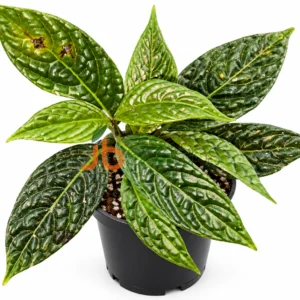 Ardisia Odontiphollia
Original price was: $30.43.$22.82Current price is: $22.82.
Ardisia Odontiphollia
Original price was: $30.43.$22.82Current price is: $22.82.
-
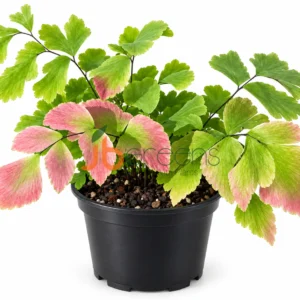 Microphyllum Verigated
Original price was: $22.13.$19.36Current price is: $19.36.
Microphyllum Verigated
Original price was: $22.13.$19.36Current price is: $19.36.


Reviews
There are no reviews yet.