
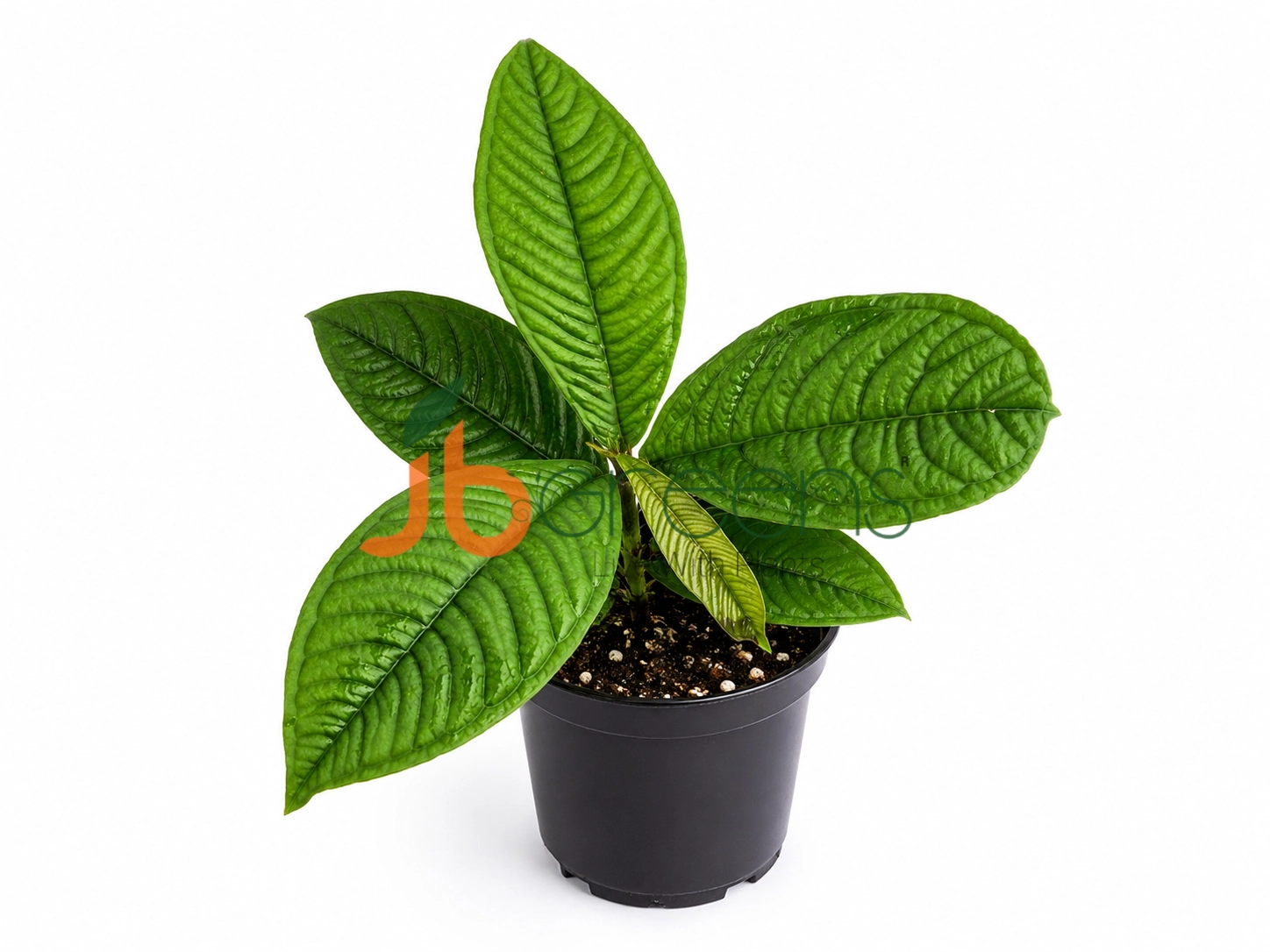
Syzygium jiewhoei is a relatively new, small‑to‑medium tree in the Myrtaceae (clove‑family) known for its lush foliage, striking bark, and showy, nectar‑rich flowers that arise directly from the trunk and branches. Below is a consolidated, practical overview tailored for cultivation and care.
Plant description
-
Growth habit: It grows as an upright, single‑trunked tree with a broad, conical crown; typical mature height is around 8–9 m, making it suitable for small‑scale ornamental plantings rather than street‑tree use.
-
Bark and trunk: The bark is thin, papery, and tends to peel in patches, usually grayish‑brown, giving an interesting, somewhat “exfoliating” texture as the tree ages.
-
Leaves: The leaves are large, elongated, and often described as reaching up to about 1 m in length on wild specimens, with a strong, rectangular‑veined texture and a glossy green surface. Young leaves can show a purplish or reddish tint before maturing to solid green; they are arranged opposite and often appear in neat, two‑rowed patterns along the stems.
-
Flowers and fruit:
-
Flowers are white, borne in dense clusters directly on older branches and trunk (cauliflorous), producing copious nectar for several days and attracting bees and other pollinators.
-
Fruits are small, berry‑like, and often described as salmon‑pink to deep‑purple when mature, with a slightly sour taste; they are appreciated more for ornamental and wildlife value than for commercial fruiting.
-
Growing conditions
-
Climate:
-
It is a true tropical lowland species, thriving in warm, humid conditions with little to no frost risk.
-
Optimal temperature range is broadly in the 20–30 °C band, with appreciable growth slowdown if temperatures regularly fall toward the lower teens or below.
-
-
Light:
-
In its native habitat it often occurs as an understory or sub‑canopy tree, so it prefers bright, filtered light or partial shade.
-
Avoid harsh, all‑day direct sun, especially in hot climates, as this can scorch leaves; semi‑shaded spots or dappled‑sun positions work well.
-
-
Humidity:
-
Appreciates high ambient humidity (roughly 60–80 %), similar to tropical rainforest conditions.
-
In drier or indoor settings, regular misting, a humidity tray, or a small humidifier can help prevent leaf margin browning and leaf‑tip burn.
-
Soil and watering
-
Soil:
-
Prefers a well‑drained, fertile mix rich in organic matter, such as a high‑quality loam or a custom potting blend with compost, coconut coir, and perlite or coarse sand.
-
It is tolerant of a range of soil types as long as drainage is good; it naturally occurs in alluvial and river‑bank‑like soils, so avoiding heavy, water‑logged clay is important.
-
-
Watering:
-
Keep the soil consistently moist but never soggy; the motto is “moist, not waterlogged.”
Allow the top layer to dry slightly between waterings, rather than watering on a rigid schedule; overwatering or prolonged saturation can lead to root rot.
-
Adaptability and cultivation notes
-
Landscape vs. container:
-
In the ground, it develops into a typical small to medium tree with a broad crown, suitable for shaded gardens, courtyards, or as a feature specimen where space allows.
-
In large containers, growth is slower and more compact, but the plant can still thrive; expect somewhat smaller leaf size and a more shrubby‑tree form.
-
-
Frost and cold tolerance:
-
It is not suited to frost or prolonged cool‑season climates; even brief exposure to temperatures near or below 10 °C can cause leaf drop or stalled growth.
Airflow and spacing:
-
Good air circulation helps reduce the risk of fungal issues on foliage, especially in humid, enclosed settings.
-
If planting in a group, space trees a few meters apart to allow for their conical spread and to avoid crowding the lower canopy.
-
Care and maintenance
-
Fertilizing:
-
Use a balanced, slow‑release or organic fertilizer formulated for tropical trees or ornamentals, applied in the warm season (spring to early autumn) when the plant is actively growing.
-
Avoid heavy, high‑salt synthetic fertilizers on light or sandy soils; instead, build soil fertility gradually with compost and organic amendments.
-
-
Pruning:
-
Prune primarily to shape the crown, remove any dead or crossing branches, or to restrict height if grown in a confined space.
-
Avoid heavy pruning during cooler or low‑light periods; the best time is in the warm, humid months when the plant can recover quickly.
-
-
Pests and diseases:
-
In humid tropical settings, watch for scale insects, mealybugs, or spider‑mites on the undersides of leaves; these can usually be managed with horticultural oil or insecticidal soap applications.
-
Root rot from poor drainage and anthracnose‑type leaf spots can occur in constantly wet conditions; improving drainage and airflow usually reduces severity.
-
Propagation
-
By seed:
-
Fresh seeds generally have the best germination; they are sown in a moist, well‑aerated seed mix and kept warm and humid.
-
A light covering of soil and consistent moisture (often aided by a clear plastic cover or humidity dome) can help; germination may take several weeks to a few months.
-
-
By cuttings:
-
Semi‑ripe or softwood cuttings treated with rooting hormone can be struck in a warm, humid, well‑drained medium (e.g., perlite–coconut mix); mist systems or sealed propagators improve success.
-
| Plant group | Other foliage & flowering plants |
|---|---|
| Genus | Syzygium |
| Botanical family | Myrtaceae |
| Light | Bright indirect light, Medium indirect light |
| Humidity | High humidity |
Only logged in customers who have purchased this product may leave a review.
Related products
-
ABOUT THE PLANT: Indonesia endemic plant from Papua The photo is representative Plant in the good condition and healthy 4-6 leaves It is sold per plant Ardisia is a genus of flowering plants in the family Primulaceae. It was in the former Myrsinaceae family now recognised as the myrsine sub-family Myrsinoideae. They are distributed in …
Read more -
ABOUT THE PLANT: Common name: Acranthera Sp. Green Metalic Indonesia endemic plant The photo is representative Plant is healthy and in the good condition It is sold per plan
Read more -
Adiantum mariesii is quite robust and spreads slowly to form a very attractive clump. –Adiantum mairisii have very good winter hardiness. This is a very rare breed. Dailly care of Adiantum mairisii Sunlight Demand: Part Sun To Light Shade Soil Condition: Peat Moss Water Requirement: High Purchase Size: 1 – 2” (3 – 5 cm)
Read more -
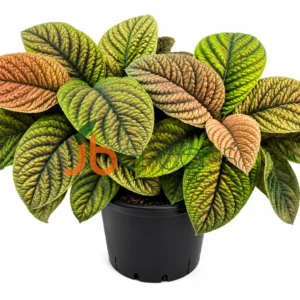
Labisia is a genus of small woody and leafy plants with creeping stems and is mainly found in Labisia species are small shrubs with upward pointing leaves. They root from stem and leaf cuttings. This plant has been cultivated in our nursery since 2018. The plants sent have healthy roots, stems and leaves. How to …
Add to cart


Products
-
 Asparagus plumosus
Original price was: $21.44.$16.60Current price is: $16.60.
Asparagus plumosus
Original price was: $21.44.$16.60Current price is: $16.60.
-
 Anthurium BVIT* Docblock
Original price was: $132.77.$119.63Current price is: $119.63.
Anthurium BVIT* Docblock
Original price was: $132.77.$119.63Current price is: $119.63.
-
 Labisia Star Light
Original price was: $30.43.$22.82Current price is: $22.82.
Labisia Star Light
Original price was: $30.43.$22.82Current price is: $22.82.
-
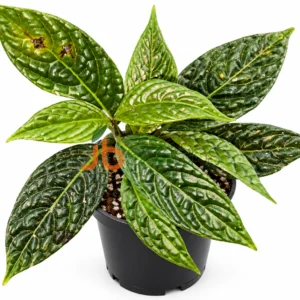 Ardisia Odontiphollia
Original price was: $30.43.$22.82Current price is: $22.82.
Ardisia Odontiphollia
Original price was: $30.43.$22.82Current price is: $22.82.
-
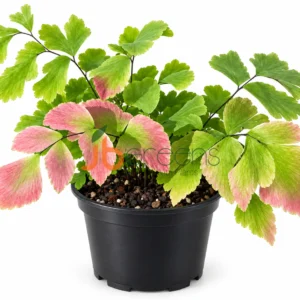 Microphyllum Verigated
Original price was: $22.13.$19.36Current price is: $19.36.
Microphyllum Verigated
Original price was: $22.13.$19.36Current price is: $19.36.


Reviews
There are no reviews yet.